May 23, 2026
Airport Layover Activities for Toddlers: Survive Long Waits
Discover proven screen-free airport activities and boredom hacks to keep toddlers calm during 3-hour layovers. Pack these travel toys and activity ideas now.
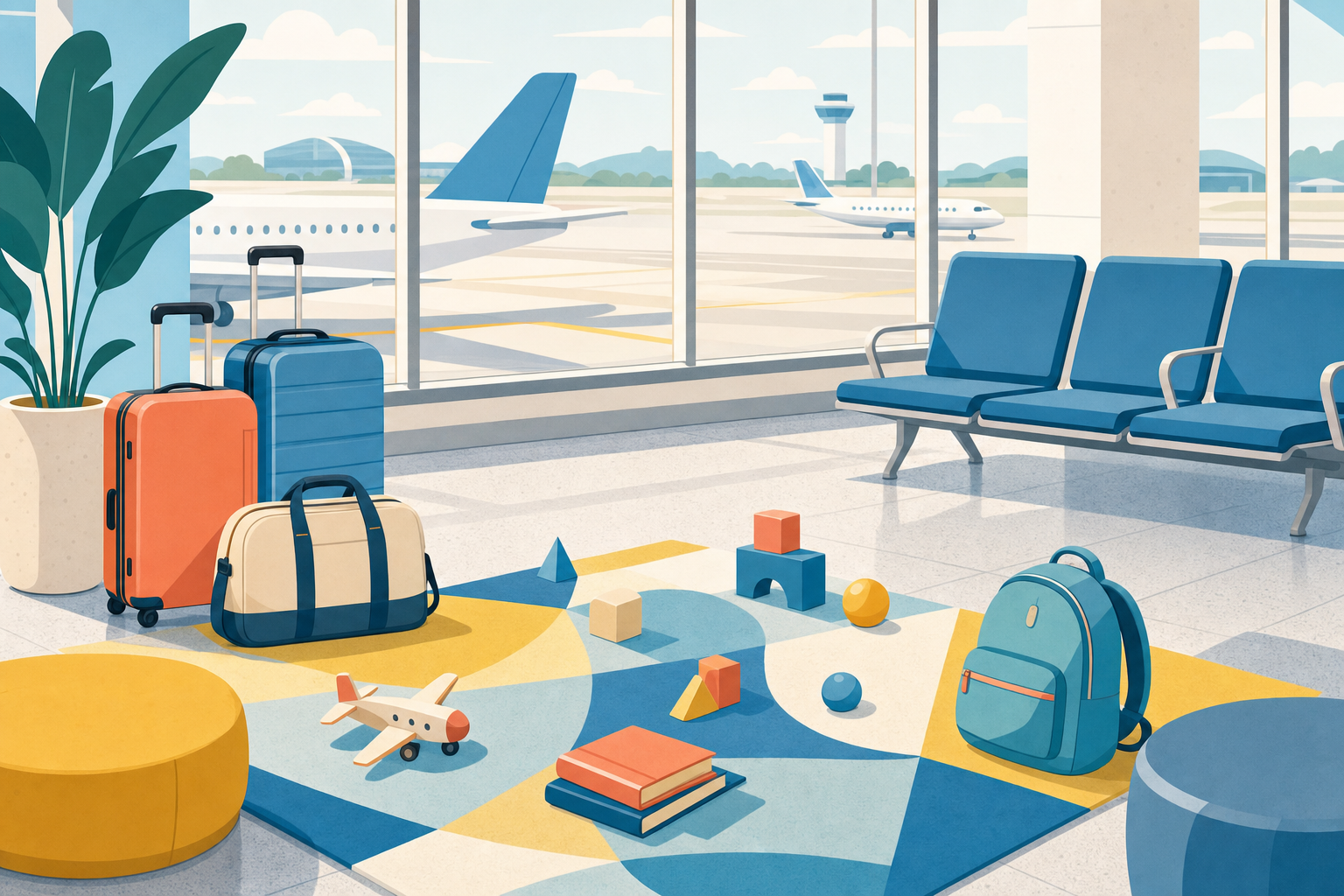
How to Keep a 2- to 6-Year-Old Calm and Busy During a Long Airport Layover Without Screens or a Meltdown
Your connection got delayed another hour, your toddler just spilled juice on their shirt, and your preschooler is asking "when do we go on the plane?" for the seventeenth time. Long airport layovers with young kids test every ounce of patience you have, especially when you're trying to avoid handing over a tablet and praying for silence.
The truth is, airports are boring for adults and absolute torture for small children who need to move, touch, and explore. But with a loose plan and a few specific tactics, you can turn a three-hour layover into something closer to manageable. Here's how to survive it without screens, meltdowns, or losing your mind.
Break the Layover Into Chunks (Not One Long Wait)
The biggest mistake parents make during a long layover is treating it like one endless block of time. A 2- to 6-year-old can't conceptualize "we have two more hours." They need structure, even if it's loose.
Divide your layover into 20- to 30-minute chunks with a clear activity for each block. It might look like this: explore the terminal for 20 minutes, snack break, bathroom trip, play a movement game near the gate, walk to find a window with planes, another snack, repeat. You're not rigidly scheduling every minute. You're giving yourself and your child a rhythm so the wait doesn't feel infinite.
Use your phone to set quiet alarms or check the time every so often. When you can say "okay, snack time is over, now we're going to walk and look for red suitcases," your child gets a mental reset. Each chunk feels like a mini-mission instead of aimless waiting.
Find Movement Space Immediately
Young kids will lose it if they sit in one spot for too long, and airport seating areas are designed for adults, not toddlers who need to move. As soon as you clear security and know your gate number, scout the terminal for open space.
Look for wide hallways with low foot traffic, empty gate areas (especially ones for flights that just departed), or family restrooms with a little floor space. Some airports have official play areas, but they're often crowded and overstimulating for younger kids. A quiet stretch of carpet or tile near a window works better.
Once you find a spot, use it for simple movement games. Play follow-the-leader where you walk in silly patterns (giant steps, tiptoes, hops). Do a scavenger hunt: "find something blue, find a wheel, find a number 5." Have your child walk along the seams in the tile floor like a balance beam. These are airport boredom hacks for kids that don't require toys or setup, just a little space and your willingness to look slightly ridiculous.
If you're traveling with a toddler who still naps in a stroller, resist the urge to keep them strapped in the whole time. Let them out to toddle and explore during the active chunks, then use the stroller for the wind-down moments.
Pack One Small Bag of Quiet, Hands-On Activities
You don't need a suitcase full of travel toys for airport wait, but you do need a few specific items that keep little hands busy without making a mess. Think small, contained, and novel (meaning your child hasn't seen it in a while or it's brand new).
Here's what works well for this age range:
- A small notepad and a few crayons or a single washable marker. Let your child draw or scribble. If they lose interest, you can turn it into a game: "draw a circle, now I draw a square, your turn."
- Reusable sticker books or puffy stickers. These stick and peel over and over without leaving residue on airport furniture.
- A tiny tub of playdough (bring just enough for one session, not the whole container).
- A small set of plastic animals, cars, or figures. Your child can line them up, hide them in your bag for you to find, or walk them along the armrests.
- Printable coloring pages from Chunky Crayon folded in your bag. They're a quiet, mess-light option when you need 10 minutes of focus.
Don't pull everything out at once. Introduce one item per chunk of time. When your child gets bored, put it away and pull out the next thing. Rotation keeps each activity feeling fresh.
If you've already packed a screen-free airplane activity bag, save a few items from that bag for the layover instead of using everything before you even board.
Use Food as an Event, Not Just Fuel
Snacks are essential for surviving a long layover with kids, but you can stretch them into an activity instead of just handing over a pouch and moving on.
Bring a mix of easy snacks (crackers, dry cereal, cheese sticks) and one or two special treats your child doesn't get often (a small cookie, a fruit pouch in a new flavor, a little bag of gummy bears). Space them out across the layover so your child has something to look forward to every 30 to 45 minutes.
Make eating a small event. Spread a napkin on the floor in a quiet corner and have an "airport picnic." Let your child help open packages or count out crackers ("let's see if we can eat exactly 10 goldfish"). For toddlers, this kind of simple involvement turns snack time into something that holds their attention longer.
Pack a refillable water bottle and make drinking water part of the rhythm too. Every time you transition to a new activity chunk, take a water break. It gives your child a predictable moment to pause and reset.
Turn Waiting Into a Low-Key Game
Kids this age don't need elaborate entertainment. They need you to narrate, notice, and play along with whatever they find interesting. Airports are full of sensory input: planes, people, suitcases, sounds, lights. Use it.
Here are specific airport layover activities for toddlers and preschoolers that require zero supplies:
- People watching with a twist. Sit near the gate and play "guess where they're going." You make up silly stories about passengers. "See that man with the big hat? I think he's going to visit his pet turtle."
- Plane spotting. Find a window with a view of the tarmac. Count planes, look for colors, talk about what the workers are doing. For toddlers, this can easily eat up 15 minutes.
- Sensory walks. Walk slowly through the terminal and take turns pointing out sounds (the beeping cart, someone's roller suitcase, the gate announcement). Then do it again but look for textures (smooth floor, bumpy wall, soft coat).
- Copycat game. You do a simple motion (pat your head, stomp your foot, wiggle your fingers), and your child copies. Then they lead and you copy. This works especially well in a quiet hallway where you won't bother anyone.
- Countdown together. If your child keeps asking "when do we leave," make it concrete. Draw or find something to represent each chunk of time left ("we have three snacks before we get on the plane"). Cross one off after each mini-activity. It helps them see progress.
Similar to what works for restaurant activities without screens, the key is making the wait feel participatory instead of passive.
Plan for Bathroom and Meltdown Moments
No matter how well you plan, your child will need a bathroom break at the worst possible time, or they'll hit a wall and start to spiral. Build in buffer time for both.
Take a bathroom trip about 45 minutes before boarding, even if your child says they don't need to go. Wash hands slowly, let them look in the mirror, make it a small break from the terminal chaos. If your child is potty training, bring a change of clothes in your carry-on and stay calm if accidents happen. Stress makes everything worse.
When you sense a meltdown brewing (whining, clinginess, refusal to cooperate), don't try to push through the current activity. Stop, find a quieter spot, and do a hard reset. Sit on the floor together, take some deep breaths, offer a snack and water, maybe pull out a comfort item (a small stuffed animal or blanket). Sometimes kids this age just need five minutes of low stimulation to pull it together.
If your child is melting down because they're overtired, dim the stimulation as much as you can. Find a corner with fewer people, turn your back to the crowd, speak quietly, and let them lean on you or sit in your lap. You're not trying to entertain them out of the meltdown. You're helping them regulate.
Know When to Just Walk (and Walk, and Walk)
When nothing else is working and you still have 40 minutes until boarding, sometimes the answer is just to walk. Toddlers and preschoolers burn energy through movement, and aimless walking beats sitting and whining every time.
Pick a landmark (a specific gate number, a coffee shop, a window at the far end of the terminal) and walk there slowly. Let your child set the pace. Point out things along the way. When you get there, pick another landmark and walk back. You're not trying to tire them out. You're giving them something to do with their body that isn't sitting still.
For 2- and 3-year-olds, you can turn the walk into a game: "can you walk like a penguin? now like a robot? now let's tiptoe." For 4- to 6-year-olds, challenge them to count something ("how many red things can we find before we get back to our gate?").
If your gate has a jetway window where your child can see the plane being loaded, camp out there for a while. Watching the luggage carts and fuel trucks gives them something to focus on, and it's more engaging than staring at rows of seats.
What to Do During the Final 20 Minutes Before Boarding
The last stretch before boarding is when kids often unravel. They're done waiting, they're tired, and they can sense you're anxious about getting on the plane with all your stuff and a squirmy child.
Use the final 20 minutes to bring the energy way down. Find seats near the gate, pull out one last quiet activity (stickers or a snack), and settle in. Don't introduce anything new or stimulating. You're transitioning from layover mode to boarding mode, and that means calm and predictable.
If your child is amped up, do one final walk to the bathroom, wash hands, get a last drink of water. These mundane tasks give them something to do and help them shift gears.
Stay near the gate but don't crowd the boarding line. Let your child sit or stand near you without forcing them into a specific spot. When your boarding group is called, gather your things calmly and matter-of-factly. If your child resists, acknowledge it ("I know, you're tired of waiting") but keep moving. The plane is the finish line, and you're almost there.
One Last Thing
Long layovers with toddlers and preschoolers are hard, and even with the best plan, your child might still melt down or refuse to cooperate. That's not a failure. You're managing a tiny human with limited self-regulation skills in a stressful, overstimulating environment.
The goal isn't perfection. The goal is getting through it with your sanity mostly intact and your child mostly calm. These screen-free airport activities and strategies won't make a layover fun, but they'll make it survivable. And survivable is enough.