October 11, 2026
Airport Security with Toddlers: A Screen-Free Survival Plan
Prep kids ages 2 to 6 for TSA security lines with this screen-free, step-by-step routine. Prevent meltdowns and breeze through checkpoints. Read the plan now.
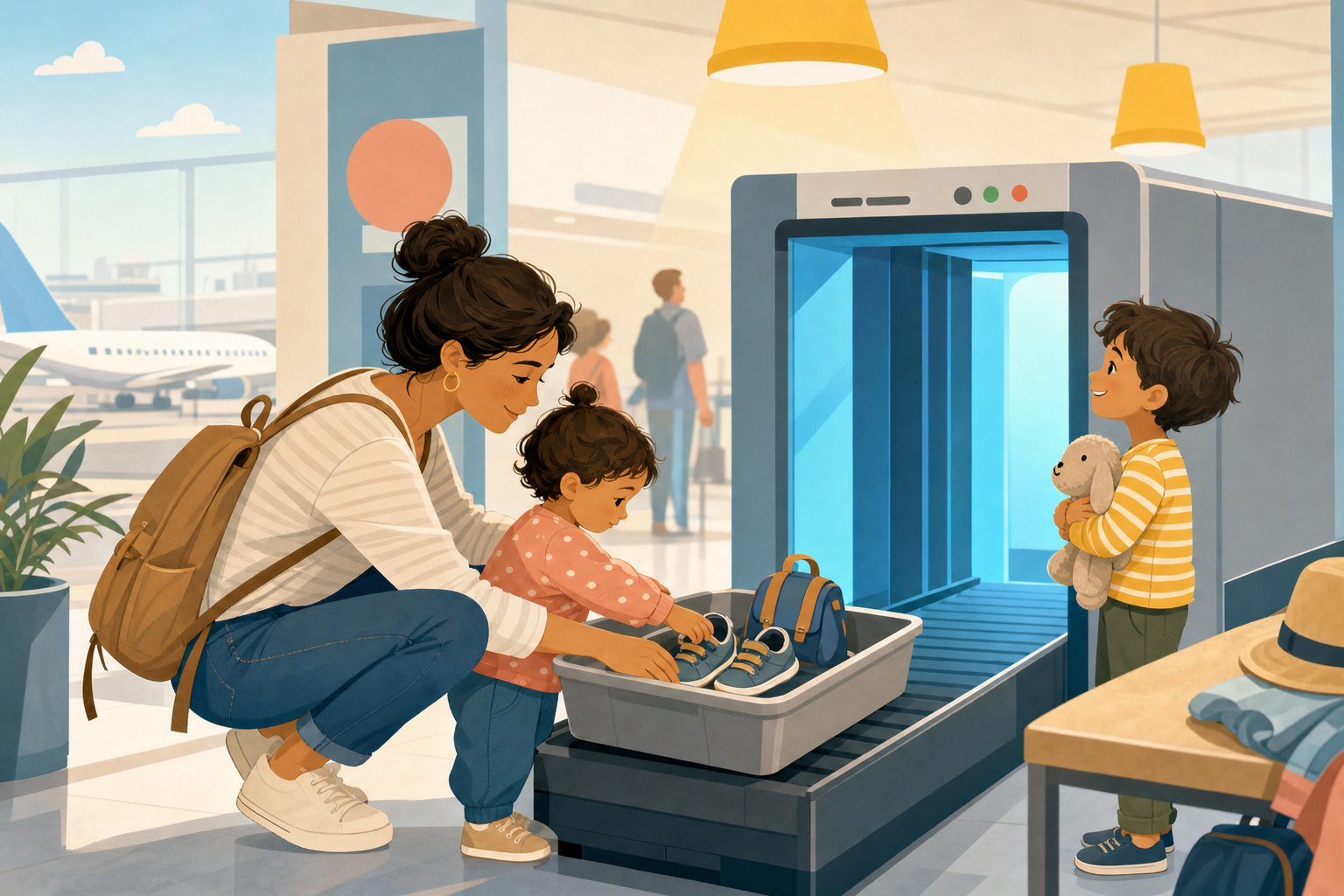
How to Get a 2- to 6-Year-Old Through Airport Security Without a Meltdown: A Screen-Free Step-by-Step Plan
You've made it to the airport. The bags are checked, the flight is still two hours out, and now you're staring down a TSA line with a toddler who just realized shoes are coming off. This is the moment most airport advice skips over. Everyone tells you to "explain the process" and "arrive early," but nobody tells you what to actually say or do while you're standing in that line with bins piling up and a 3-year-old refusing to let go of your leg.
Here's a concrete, screen-free plan for airport security with toddlers and young kids, built around specific jobs, a short script, and activities that work in the two minutes it takes to get through the scanner.
Why Airport Security Melts Down Kids (Not Just Tantrums)
TSA security line kids aren't being dramatic. For a 2- to 6-year-old, security asks them to do several hard things at once: stand still in a line, take off shoes and a jacket, hand over a beloved stuffed animal to a stranger, walk through a weird metal doorway alone, and wait on the other side without their stuff. That's a lot of transitions stacked on top of each other, often after a stressful car ride or a rushed morning.
Child airport meltdown prevention isn't about bribery or distraction. It's about reducing the number of surprises and giving your child something specific to do instead of something to resist. If your child already struggles with transitions at home, the same strategies that work for a first-then chart to stop transition battles apply here, just compressed into airport time.
The Family Airport Checklist: Set Up the Night Before
A smooth security line starts long before you get there. Build these into your family airport checklist so the morning isn't the first time your child hears about any of it:
- Pick "airport shoes": slip-ons with no laces or buckles for every kid over 2.
- One clear backpack or bin bag per kid so they can place their own items in the bin.
X Limit carry-on toys to 2 items per child, nothing with buttons or batteries that trigger extra screening.
- Practice the walk-through at home: pretend a doorway is the scanner and have your child walk through it holding nothing.
- Pack a small zip pouch with a travel-size coloring book or sticker sheet for the other side of the belt.
Doing this prep the night before means the morning of travel is about execution, not explanation.
Give Every Kid a Job: The Age-by-Age Plan
Kids this age do better with a role than with an instruction. Assign a specific, repeatable job based on age before you even reach the line.
Ages 2 to 3:
Their only job is "carry your lovey and walk next to me." Don't ask a 2-year-old to manage a bin or shoes. Carry them through the walk-through if needed and tell TSA ahead of time; most agents will let a toddler stay in a parent's arms.
Ages 4 to 5:
Give them the "shoe job": they take off their own shoes and place them in the bin. Add the "backpack job" if they're already comfortable carrying a small bag through the line.
Age 6:
They can handle the "bin captain" role: placing their own shoes, jacket, and bag in the bin, and then watching for it to come out the other side. This gives them a sense of control exactly when things feel most out of their hands.
If you have more than one child in different age groups, this is basically a mini version of managing siblings of different ages on a long trip: one clear job per kid, no overlap, no waiting around with nothing to do.
The Screen-Free Security Line Script
This is the part most advice skips: what to actually say and do, step by step, while you're standing in line.
- At the back of the line: "We're going to play Bin Detective. Your job is to find your shoes after they go through the X-ray machine." This reframes the wait as a task, not a holding pattern.
- As you approach the bins: Narrate out loud, calmly, exactly what's happening. "Now we take off shoes. Now your bag goes in the bin. Now we walk through the doorway." Predictability lowers anxiety more than almost anything else.
- At the walk-through: Give a simple physical cue, like a high-five or a specific phrase ("Big brave steps!") right before they walk through alone. Kids this age do better with a ritual than a reminder.
- If they balk at letting go of a toy or lovey: Offer to carry it through in your own bag instead of making them hand it to a stranger directly. Small accommodation, big difference.
- On the other side: Immediately hand back shoes or lovey and say the job is done. "Bin Detective complete!" Closing the loop matters; kids need to know the uncomfortable part is officially over.
This script covers the bulk of airport security activities for children without needing props, screens, or elaborate games. It's really about pacing and narration.
After the Belt: A Quick Reset Before You Walk to the Gate
Once shoes and bags are back on, kids often need a short reset before they can walk calmly to the gate. Don't rush this part; a rushed reset is where meltdowns actually happen, not during security itself.
- Sit on a bench for 60 seconds and let them re-pack their own backpack. The repetitive motion is calming.
- Hand over the small zip pouch you packed. Printable coloring pages from Chunky Crayon make a quiet, mess-light option here since they print at home before you even leave and need nothing but a crayon.
- If your flight involves a longer layover later, this is also a good moment to mention what's coming next in simple terms, the same way you'd use a flexible visual schedule for changing holiday plans to prep a child for what's ahead.
The One Thing to Remember
How to prepare kids for TSA really comes down to this: give them a job, narrate what's happening before it happens, and close the loop clearly once it's over. A screen-free airport routine doesn't need to be elaborate. It needs to be predictable, repeatable, and age-appropriate.
If you want a ready-made, step-by-step version of this exact plan with printable job cards for the security line, our related guide on keeping a toddler entertained in the security line in under 10 minutes walks through it visually, which is especially helpful if you're building this routine for the first time.
You don't need to eliminate every wobble. You just need a plan that gets everyone through the line with their shoes, their lovey, and their patience mostly intact.