October 16, 2026
Screen-Free Ferry Activities for Kids: Full Packing Plan
Planning a long ferry crossing with children? Get a simple activity rotation plus a packing list for screen-free ferry travel with toddlers and kids.
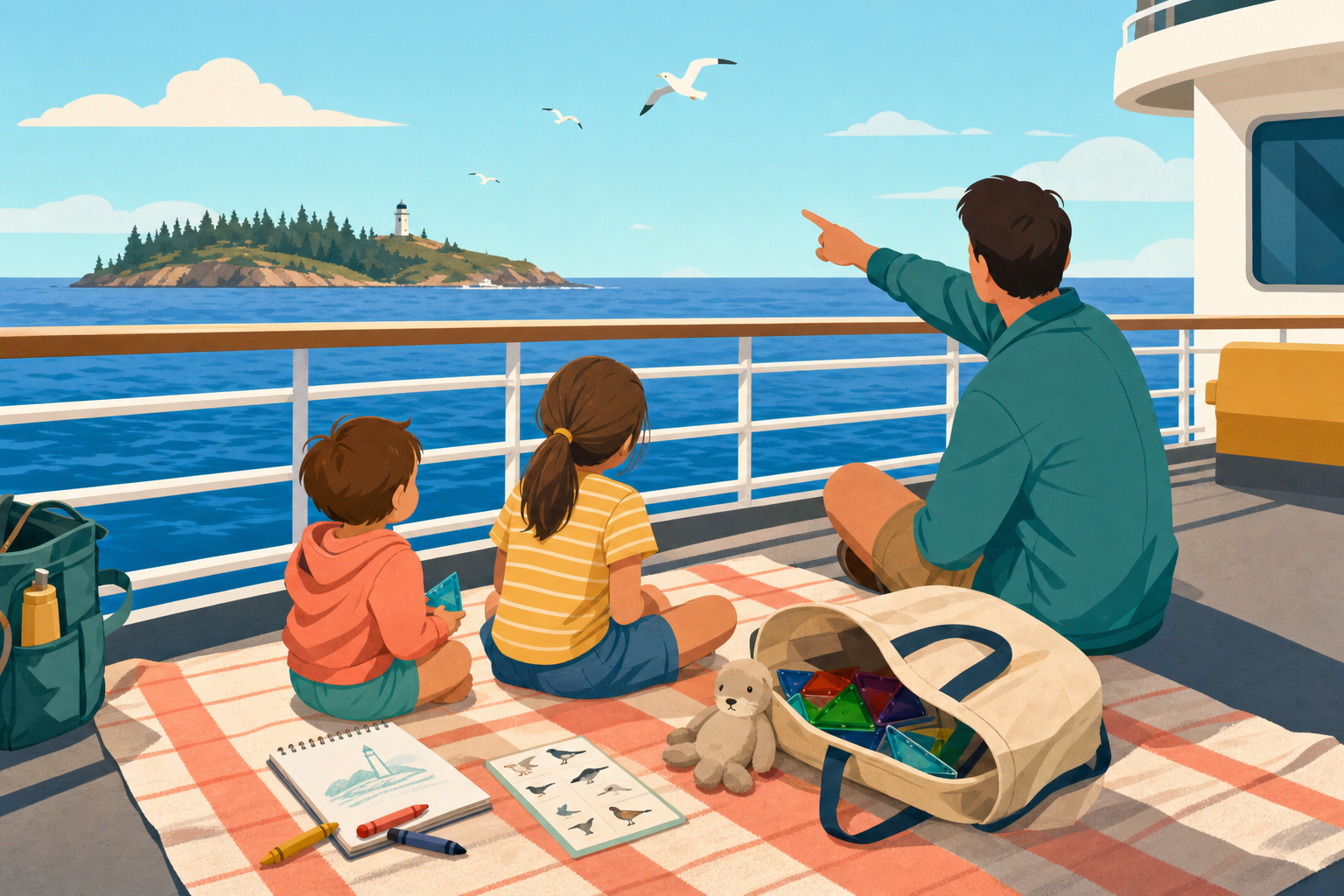
How to Keep a 2- to 10-Year-Old Entertained on a Long Ferry Ride Without Screens
A ferry crossing sounds relaxing until you're three hours in, your toddler has already circled the vending machine twice, and your 8-year-old is bored enough to start poking her brother. Ferries are not like car trips or flights. You can't pull over, the deck is loud and windy, your seats might be shared with strangers, and the bathroom is a hike away. Most ferry travel tips online just repeat generic road-trip advice. This is a plan built for the actual constraints of a boat: limited space, motion, wind, and long stretches where you can't spread out.
Here's a simple activity rotation and packing plan that works for mixed ages, from a wobbly 2-year-old to a too-cool 10-year-old.
Why Ferry Travel With Toddlers Needs a Different Plan
A car seat keeps a toddler contained. A ferry does not. Once you're on board, little ones want to walk, climb on benches, and wander toward the railing, which means you're managing both entertainment and safety at the same time.
The fix is to think in zones, not just activities:
- Seat zone: quiet, low-mess activities for when you're buckled into a table or booth
- Floor zone: slightly more movement, used when you have a corner or play area
- Deck zone: supervised, high-energy release when the weather allows
Rotating between these zones keeps kids from getting stir-crazy in one spot, and it gives you a plan for when the wind picks up and deck time isn't an option.
The Activity Rotation (Works for Ages 2 to 10)
Instead of one big bag of toys, break the trip into 20 to 30 minute blocks. When one activity loses steam, you already know what's next, which avoids the "I'm bored" spiral five minutes after you sit down.
Block 1: Settling in (seat zone)
- Sticker books or reusable sticker scenes for the 2 to 5 crowd
- A small notebook and clipboard for "ferry journal" doodles or tally marks (count seagulls, other boats, life jackets)
- Magnetic travel games (checkers, tic-tac-toe) for older kids
Block 2: Scavenger hunt (seat or floor zone)
Make a simple printable or handwritten list before you leave: life ring, captain's hat, someone wearing yellow, a dog on a leash, a vending machine, a map on the wall. This works for ages 4 and up, and younger siblings can just point at things.
Block 3: Deck time (deck zone, weather permitting)
- A short, supervised walk around the deck
- "I spy" with the horizon: boats, birds, flags, buoys
- A simple motion game like counting waves or naming colors they see
Keep deck time short and structured. Wind and movement make toddlers unsteady fast, and this is the zone where close hands-on supervision matters most.
Block 4: Quiet reset (seat zone)
- Snack and a story
- Printable coloring pages from Chunky Crayon are a quiet, mess-light car (or boat) activity that works well right after active play, when kids need to calm down but aren't ready to sleep
Then loop back to Block 1 with a fresh angle, like a new sticker page or a different scavenger hunt list.
If you've used a similar screen-free rotation for road trips, this will feel familiar. In fact, the same "settle, hunt, move, reset" structure works well for a screen-free sibling activity plan you might already have at home, just swap out the deck block for a backyard lap.
What to Pack for a Ferry Trip With Kids
The right ferry ride activity bag is smaller than you think. Overpacking just means more stuff to manage while you're also holding a toddler's hand near a railing. Aim for one bag per adult, not one per kid.
Core supplies (fits in one backpack):
- Reusable sticker books, a small clipboard, pencils with caps
- A printed scavenger hunt list (laminate it if you want to reuse it)
- A magnetic game or deck of cards
- Snacks that don't need refrigeration: crackers, dried fruit, pouches
- A refillable water bottle each (ferries often sell overpriced drinks)
- Motion sickness aids: ginger chews, wristbands, or your pediatrician's go-to
- A light jacket per kid, even in summer, because deck wind is colder than expected
- A small first aid kit with band-aids and wipes
Skip these:
- Loose toys with small parts (they roll away on a moving boat)
- Anything that needs a flat surface bigger than a tray table
- Bulky books; one or two is plenty since reading on a moving boat can trigger queasiness in some kids
If you're also managing a stroller or car seat for the toddler, pack light enough that one adult can carry everything while the other holds hands. This is the same logic behind boarding a train alone with a toddler and stroller: fewer bags, faster hands, less chaos at the gangway.
Long Ferry Crossing With Children: Timing and Motion Sickness
For crossings over two hours, timing your activity rotation around meals and motion sickness windows matters more than the activities themselves.
- Feed kids a light meal before boarding, not a heavy one. Full stomachs plus boat motion is a rough combination.
- Keep the most active, screen-free ferry activities (deck walks, scavenger hunts) in the first half of the trip when energy is highest.
- Save quieter, seated activities for the second half, when motion sickness risk often increases and kids are naturally winding down.
- If anyone feels queasy, head toward the middle of the boat, lower level, and look at the horizon rather than a book or paper.
A 2-year-old on a long crossing will likely need a nap window built in. Bring a small blanket or their usual comfort item and don't fight it if they crash mid-scavenger-hunt.
A Quick Age-Banded Cheat Sheet
- Ages 2 to 3: sticker books, simple point-and-name games, short deck walks held firmly by the hand, naps
- Ages 4 to 6: scavenger hunts, I spy, simple coloring pages, short story time
- Ages 7 to 10: tally-mark journals, magnetic games, longer scavenger hunts with categories, people-watching challenges ("find someone reading a book," "count backpacks")
Mixed-age families can run the same scavenger hunt with different difficulty levels: younger kids point, older kids read and check off the list themselves.
Before You Board
Pack the night before, keep the bag to one per adult, and walk through the rotation in your head so you're not improvising mid-crossing. A long ferry ride with kids is manageable once you stop trying to entertain everyone with one big toy bag and instead plan for zones, timing, and a few simple, repeatable games. The goal isn't a Pinterest-perfect itinerary, it's getting off the boat with everyone fed, calm, and still speaking to each other.