October 5, 2026
Get Kids to Pack Their Own Suitcase, No Stress
A road trip packing checklist for kids by age, plus tips for packing cubes and a printable list so nothing gets left behind. Grab yours free!
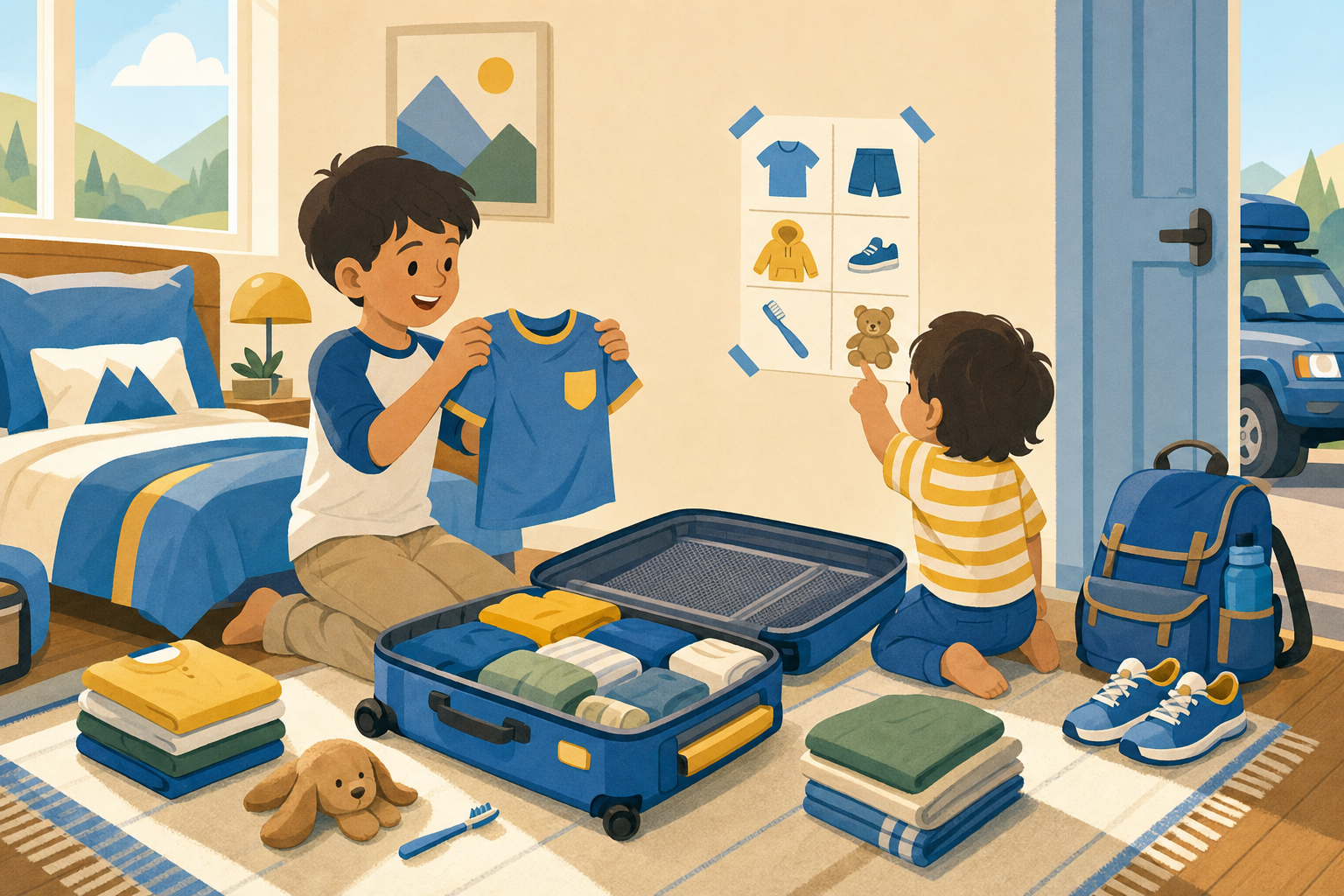
How to Get Kids Ages 2 to 10 to Pack Their Own Suitcase Without Forgetting Essentials
You are standing in a hotel room three hours from home and your 6-year-old has packed fourteen stuffed animals, zero pairs of underwear, and one single shoe. This is not a packing failure. This is what happens when a kid is handed a suitcase and told to "pack your stuff" with no system behind it.
Letting kids pack their own bag is good for independence. But most advice stops at "let them choose their clothes" and skips the part where parents actually need pants to show up in the bag. Here is a system that splits the job: kids own the fun stuff, you own the five-minute essentials check, and nobody ends up barefoot at a rest stop.
Why "Just Let Them Pack" Backfires
A 2-year-old does not know what a suitcase is for. A 7-year-old knows, but will pack eleven toys before thinking about socks. A 10-year-old can genuinely handle most of it alone, but still forgets a toothbrush if there's no checklist.
The common advice to "let kids pack some of their own things" is true but incomplete. It doesn't separate what a child can reasonably decide (which shirt, which toy) from what needs an adult eye (enough underwear for the whole trip, the right shoes for the weather). Without that split, you get chaos or you get a parent who just repacks everything the kid did, which teaches the kid nothing.
The Two-Bag System That Actually Works
Instead of one suitcase and one set of instructions, use two categories inside the same bag:
- The kid zone: clothes, pajamas, 1 to 2 comfort items, a small activity pouch. The child picks, folds (or stuffs), and packs this.
- The parent zone: toothbrush, medicine, diapers or pull-ups, swim stuff, weather-specific gear, chargers. You pack this, every time, no exceptions, even for a 10-year-old.
This isn't about trust. It's about cognitive load. Kids this age genuinely cannot hold "is it going to rain," "do we have enough underwear for 4 days," and "did I remember the retainer" in their head at the same time as "which toy do I want." Giving them full ownership of the fun decisions and none of the forgettable-but-critical ones is a family trip packing system that respects what a kid's brain can actually do.
A printable kids packing checklist taped to the inside of the suitcase lid makes the kid zone self-checking: they can look at pictures or words, find the item, and check it off without asking you twenty questions.
Kids Travel Packing List by Age: What Each Stage Can Handle
Ages 2 to 3
They can choose between two outfits you've already picked out and put them in the bag. That's the ceiling, and that's fine. Use a picture checklist (photo of pajamas, photo of the comfort toy) so they feel like they're "doing it" even though you're doing 90 percent of the real work.
Ages 4 to 6
This is where real participation starts. Give them a short, visual checklist: 3 shirts, 3 pants, pajamas, 1 toy, 1 book. Let them pick which shirts within that number. They fold badly and that's okay, rolling clothes into packing cubes actually hides a lot of sloppy folding and keeps their section contained.
Ages 7 to 8
They can read a written checklist and manage quantities themselves ("pack 4 pairs of socks"). This is a good age to introduce road trip packing cubes for kids, one cube per category (tops, bottoms, pajamas) so their stuff doesn't become a loose pile the parent has to sort through at the hotel.
Ages 9 to 10
Hand them the full printable checklist, including weather and activity-specific items (swimsuit, cleats, rain jacket), and let them pack almost independently. You still do the essentials check at the end, but your job is verification, not doing it for them.
If your evenings already run on routines, this age-by-age breakdown pairs naturally with a printable school-bag routine chart, since the same "checklist on the bag, kid checks it off" trick works whether the bag is going to school or to grandma's house.
The Parent-Only Essentials Check (5 Minutes, Non-Negotiable)
No matter how independently your kid packed, you do one final pass before the suitcase gets zipped. This is not about redoing their work. It's a quick scan for the stuff that ruins a trip if it's missing:
- Underwear and socks: count them, don't assume
- Medications, inhalers, EpiPens
- Weather-appropriate layer (even in summer, pack one warm layer)
- Swimsuit and goggles if there's a pool
- Phone charger or tablet charger if they have one
- A backup outfit in case of a car sickness or bathroom mishap
Say it out loud as you check: "Okay, I'm doing my quick check, you did your part already." This keeps the division of labor clear. They packed. You verified. Nobody feels like their work got erased.
If you're heading somewhere with a hotel stop, this essentials check pairs well with a hotel check-in routine for kids so the first 20 minutes in a new room don't turn into a scavenger hunt for pajamas.
Making It Stick: Packing Cubes and a Printable Checklist
A road trip packing checklist for kids works best when it lives in two places: once as a printable list taped inside the suitcase, and once as a physical routine the night before you leave. The night-before part matters more than people think. A rushed morning-of pack job is where essentials get skipped.
If your family already uses an evening checklist system for school nights, the same structure applies here almost word for word, just swap "backpack" for "suitcase." Parents using a printable night-before checklist for school already have the muscle memory for this; packing for a trip is just a bigger version of the same habit.
For the actual packing list, keep categories short and visual for younger kids, written and detailed for older ones:
- Clothes (by count, not by item name, for younger kids)
- Pajamas
- One comfort item
- Shoes (worn, not packed, for travel day)
- Activity pouch (books, small toys, quiet games)
Speaking of the activity pouch, keep it light. Printable coloring pages from Chunky Crayon are a quiet, mess-light option kids can pack into their own section without needing a bin of markers and loose paper.
The Short Version
Kids can absolutely pack their own suitcase starting as young as 4, as long as the job is split clearly: they own the fun choices inside a visual checklist, you own a five-minute essentials scan before the zipper closes. Add packing cubes for the older kids and a taped-in checklist for the younger ones, and the suitcase chaos turns into a routine nobody has to think too hard about by trip three.