October 21, 2026
Potty Training Road Trip: Stop Schedule & Emergency Kit
Master road trip potty breaks with a stop schedule, portable potty car kit, and accident plan. Get the full potty training road trip checklist now.
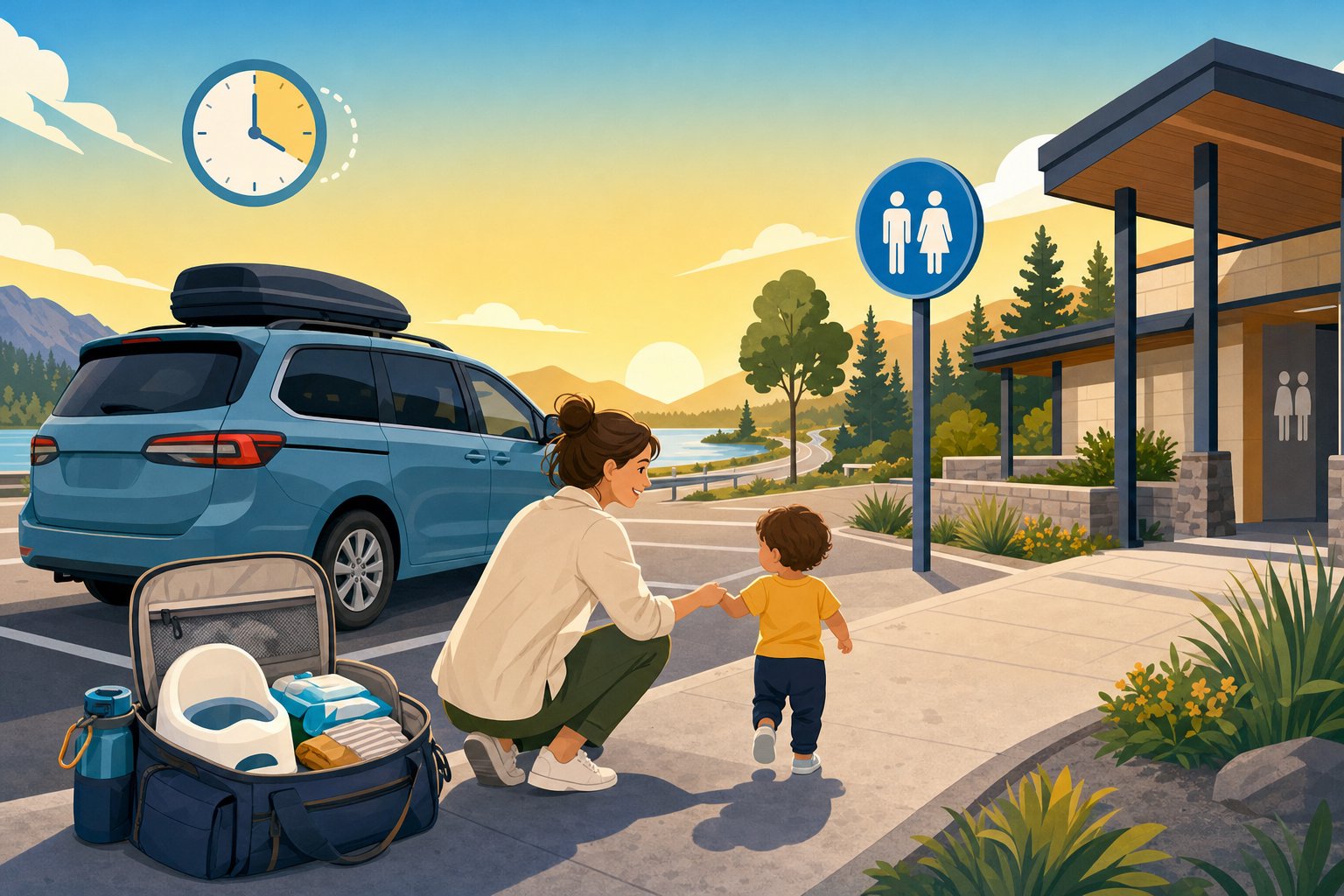
How to Plan Potty Breaks on a Road Trip with a Potty Training Toddler
You're 40 minutes into a 6-hour drive when you hear it from the back seat: "I have to go potty." Not in ten minutes. Not at the next exit. Now. If you've lived this, you already know that generic advice like "stop every two hours" doesn't cut it when a toddler's bladder runs on its own schedule.
Here's a system that actually accounts for how potty training works in a moving vehicle: a route-based stop schedule, a kit you can reach without pulling over, and a plan for when an accident happens anyway.
Build a Stop Schedule Based on Miles, Not Just Hours
Most road trip advice says "stop every two hours." For a potty training toddler, that's too long and too vague. Newly trained kids often need to go every 60 to 90 minutes, especially in a car seat where pressure on the bladder is different than sitting on a couch.
Before you leave, map your route and mark stops every 60 to 75 minutes of drive time, not every 100 miles. Highway speed varies, but your toddler's bladder doesn't care about your ETA.
A practical schedule looks like this:
- Stop 1 (60 to 75 min in): Bathroom try, even if they say they don't need to go. Pull-ups often mask the urge until it's urgent.
- Stop 2 (another 60 to 75 min): Bathroom plus a snack and 5 minutes of movement outside the car.
- Stop 3 and beyond: Repeat the pattern, but shorten the interval in the afternoon when kids get tired and distracted and miss their own body signals.
Use a rest stop app (Gas Buddy, iExit, or your map app's filter for rest areas) to pre-plan actual stop locations along your route the night before. Don't wing it. Knowing exactly where the next real bathroom is removes the panic of searching while a toddler squirms in the back seat.
If you have other kids in the car who get bored waiting through bathroom stops, a few minutes of a simple car game at each stop keeps everyone from turning the break into a meltdown. These traffic jam games that need zero supplies work just as well for a 5-minute rest stop wait as they do for stopped traffic.
Build a Portable Potty Car Kit You Can Reach Without Stopping
The biggest mistake parents make is packing the emergency kit in the trunk. If your toddler says they have to go, you need access from the back seat, not a roadside unpacking session.
Keep this kit in a soft bag on the floor behind the front passenger seat, within arm's reach of whoever is sitting next to your toddler:
- A collapsible or inflatable travel potty seat (the fold-flat silicone kind takes up almost no space)
- Disposable potty liners with absorbent pads, so you're not dumping liquid on the shoulder of the highway
- A roll of plastic bags for bagging up used liners or soiled clothes
- Flushable wipes and a travel pack of regular wipes
- Hand sanitizer
- A small privacy cover or large towel if you'll ever need to do a roadside stop in open view
- A pee pad or waterproof mat to protect the car seat itself
This is your portable potty car kit for toddlers, and it should live in the car for the entire trip, not just the first leg. Check it before you leave and restock liners and wipes if you've used some on a previous outing.
The 90 Second Plan for "I Have to Go RIGHT NOW"
When the sudden urgent announcement happens between stops, you need a plan that takes seconds, not minutes of debate.
- Ask the yes/no question fast. "Can you hold it until the next exit (check your map for distance), or do we need to pull over now?" Toddlers often can answer this honestly if you ask calmly instead of panicking.
- If it's a genuine emergency, find the nearest safe pull-off. A rest area, gas station, or even a parking lot works. Avoid the actual shoulder of a highway; it's not safe for anyone to be standing outside the car there.
- Use the portable potty in the car if there's truly nowhere to stop. With the privacy cover up and the car in park, the portable potty seat set up over a trash bag or liner works surprisingly well for a quick in-seat use.
- Reset the timer. After any unscheduled stop, treat it like stop 1 again, since you now know their bladder capacity that day is shorter than planned.
If you have siblings in the car during the scramble, a quick low-key game keeps them from adding stress to the moment. The no-toy car activities for toddlers work well here too, since they need zero setup and don't compete for your attention while you're managing the potty situation.
The Accident Plan: What to Do When It Happens Anyway
Accidents happen on road trips even to fully potty trained kids, because new environments, excitement, and holding it too long all work against a toddler's control. Plan for it instead of hoping it won't happen.
- Pack two full outfit changes per kid, not one, stored in a labeled gallon bag so you can find them without digging through the whole suitcase.
- Keep the pee pad under the car seat at all times so cleanup is fast and the seat itself stays protected.
- Bag the soiled clothes immediately in a dedicated "wet bag" (a cheap zippered wet bag or even a grocery bag works) so they don't touch clean items.
- Stay neutral. A simple "Accidents happen, let's get you changed" keeps shame out of it, which actually helps potty training progress faster than a big reaction either way.
- Change at the next real stop if it's not an emergency, using baby wipes to get through the next 15 minutes if you're mid-highway with no shoulder to pull onto.
This kind of calm, practiced response is the real difference between a bad 10 minutes and a trip-ruining meltdown. Once everyone's cleaned up and back in their seats, a few quiet minutes helps reset the mood. Printable coloring pages from Chunky Crayon are a quiet, mess-light way to settle everyone back down after an accident stop, no extra supplies needed beyond crayons you probably already have in the car.
Putting the Whole System Together
The parents who handle road trip potty breaks well aren't lucky, they just planned for the predictable parts (the schedule, the kit) and rehearsed the unpredictable parts (the sudden announcement, the accident). Print your stop schedule, pack the kit where you can reach it, and know your plan before the first "I have to go" hits. That's the whole difference between a stressful drive and one you can actually get through.