July 5, 2026
Quiet Car Activities for Tired Kids: No Screens Needed
Discover calm, screen-free road trip activities perfect for exhausted 4 to 7 year olds who aren't ready to nap. Keep peace in the backseat with these genius ideas.
Low-Energy, Screen-Free Road Trip Activities for Tired-but-Not-Sleepy 4 to 7-Year-Olds
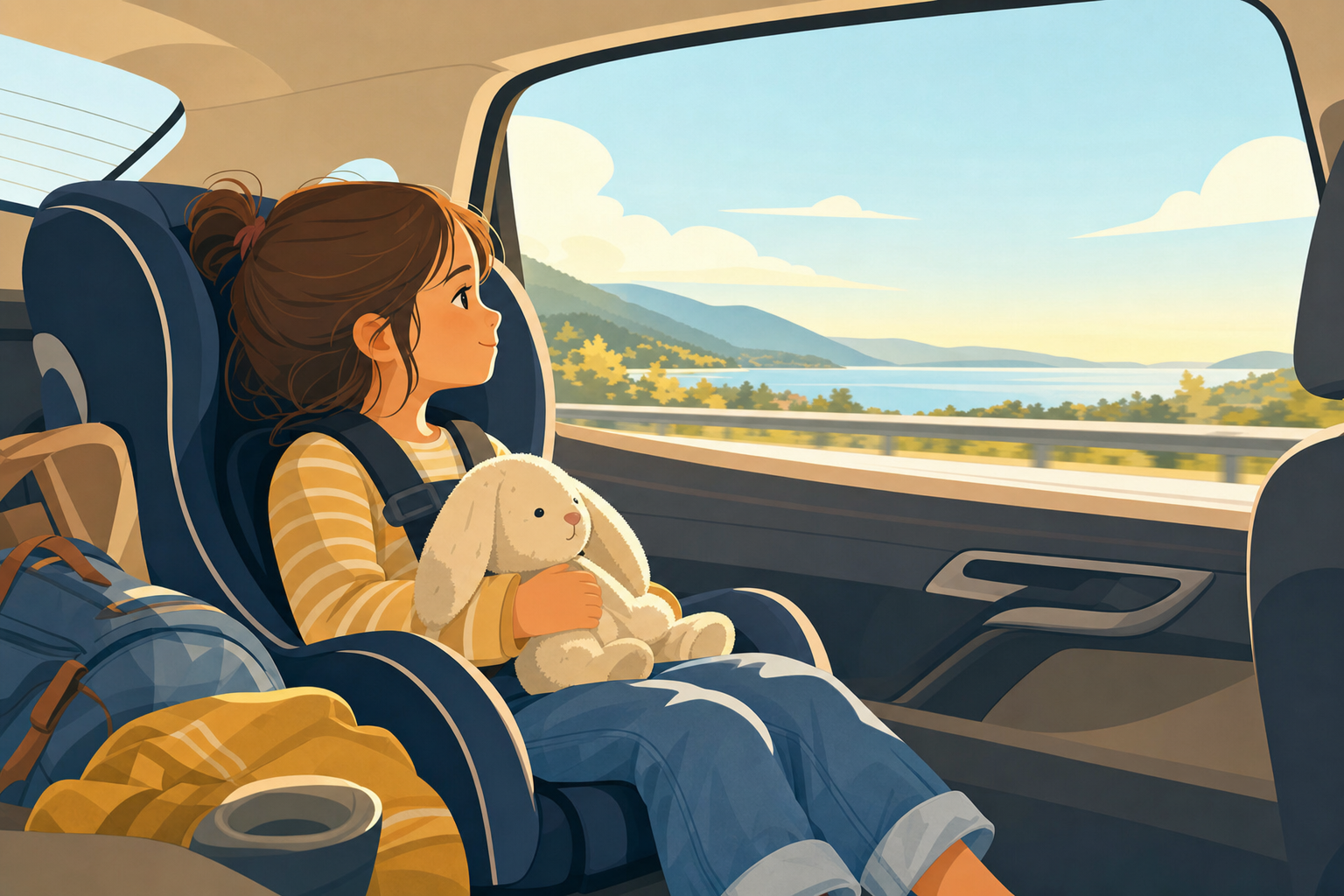
Your kid is rubbing their eyes, leaning against the car door, too wiped to play I Spy, but the second you suggest closing their eyes, they insist they're "not tired." You've got 90 minutes left in the drive and a child who's hit that miserable sweet spot: too exhausted for games, too wound up to sleep, and heading straight toward a meltdown.
Most road trip activity lists assume your child has energy to burn. They don't address this specific low-battery zone where regular games feel like too much work and silence feels impossible. Here's what actually works when your kid is running on fumes but won't give in to rest.
Why Standard Road Trip Games Fail Right Now
When a 4- to 7-year-old is tired, their executive function tanks. They can't track complex rules, sustain attention on fast-moving scenery, or tolerate losing a game. License plate bingo requires focus. Alphabet games need quick thinking. Audiobooks demand listening stamina.
What they need instead: gentle sensory input, predictable patterns, and activities where there's no wrong answer. Think less "game" and more "soothing occupation." If you've dealt with screen-free car activities for kids who get carsick, you already know the drill: low visual demand, repetitive structure, calming rather than stimulating.
Slow Observation Activities (No Counting, No Competition)
Cloud Watching Through the Window
Tell your child to pick one cloud and watch it change shape as you drive. Not "find all the clouds that look like animals." Just one cloud. Describe it out loud together every 30 seconds. "It's getting fluffier." "Now it looks like it's stretching."
This works because it's meditative. No pressure, no finish line, just slow noticing. It often leads to silence, which is the actual goal.
Color Collecting (One at a Time)
Pick a single color. Your child's job is to quietly notice every time they see it outside the window. No shouting, no pointing, just a soft "red" when they spot a barn or a truck. After five minutes, switch colors.
The repetition is soothing. The lack of competition removes stress. It's almost hypnotic, and that's exactly what a low-energy kid needs.
Tactile Fidget Kits for Passive Hands
Tired kids need something to do with their hands that doesn't require brainpower. Pack a small ziplock bag with:
- A piece of velvet or fleece fabric (stroking texture is calming)
- A smooth river rock or worry stone
- A short loop of ribbon or soft rope for finger weaving
- A pipe cleaner they can bend into shapes without looking
These aren't "activities" in the traditional sense. They're sensory anchors. Your child can fidget, twist, and stroke while staring out the window in a semi-zoned-out state. That's perfect. Let them drift.
Avoid anything that requires precision (no beads, no tiny Lego). Fine motor control evaporates when kids are tired, and fumbling with small pieces triggers frustration.
Audio That Requires Zero Mental Effort
Audiobooks are too demanding right now. Story podcasts require tracking characters and plot. But certain types of audio work beautifully for exhausted brains.
Nature Sounds or Ambient Noise
Play gentle rain sounds, ocean waves, or forest ambience through the car speakers. It's not entertainment; it's a sound blanket. Many kids will close their eyes "just to listen" and accidentally fall asleep. If they don't, they still get 20 minutes of calm.
Familiar Music on Repeat
Pick one song your child knows by heart. Play it three or four times in a row. Repetition is comforting when you're drained. They might hum along quietly, or they might just let it wash over them. Either way, it fills the silence without asking anything of them.
Skip anything with a fast tempo or loud dynamics. You want steady, predictable, almost boring.
Gentle Whisper Games (Barely Interactive)
The Slow Question Game
You ask one very easy question every two or three minutes. Not trivia. Not anything that requires thinking. Just:
- "What's your favorite color today?"
- "If you could eat one snack right now, what would it be?"
- "Do you like the clouds or the sky better?"
Your child answers in one or two words. You say "cool" or "nice." Then silence for another few minutes. Repeat.
The goal isn't conversation. It's giving them a tiny anchor point so they don't feel ignored, but not demanding enough engagement to tip them into overstimulation.
The Hum-Along Game
You hum a familiar song (think "Twinkle Twinkle" or "Happy Birthday"). Your child hums it back, or hums along with you. No words, no clapping, just low humming.
Humming is inherently calming. It regulates breathing and gives their brain something to do without requiring alertness. If they stop after one verse, that's fine. If they hum for ten minutes, even better.
When Coloring Still Works (But Differently)
Most tired kids can't handle detailed coloring books in a moving car. But if you simplify the task, coloring can be meditative. Printable coloring pages from Chunky Crayon offer large, simple designs that don't require precision, which works well for a child who's low on focus but needs something quiet to do with their hands.
Use thick crayons or markers (not pencils, which require pressure). Let them color outside the lines. Better yet, give them a blank piece of paper and tell them to "color it however feels good." No picture, no rules, just scribbling in slow circles.
The motion is what matters, not the outcome. If they only make it through two minutes before they're done, you still bought two minutes of peace.
What to Avoid (Even Though It's Tempting)
Don't try to perk them up with:
- Sugary snacks (you'll get a brief spike, then a worse crash)
- High-energy games (they'll either refuse or have a meltdown mid-game)
- Asking "Are you tired?" repeatedly (it makes them defensive)
Also skip anything that involves reading in the car if your child is prone to motion sensitivity. A tired, carsick kid is a nightmare scenario, and you don't want to risk it.
The Bridge to Actual Sleep
Sometimes these activities don't lead to sleep. They just buy you 30 to 45 minutes of quiet, and that's enough. But if you do want to encourage the transition to a nap, try:
- Dimming the car (sunshades on their window, even during the day)
- Lowering your own voice to near-whisper
- Playing the same calming song on loop until it becomes a sleep cue
- Offering a small stuffed animal or lovey if they usually sleep with one at home
Don't announce "nap time." Just create the conditions and let them drift if they're ready. If they're not, you still avoided the meltdown, and that's a win.
One Last Thing: Lower Your Expectations
When your kid is in this state, the goal isn't engagement or learning or making memories. It's survival. You're managing a tiny, irrational human who's too tired to function and too stubborn to admit it.
If you get through the next hour without tears (theirs or yours), you've succeeded. These activities aren't about fun. They're about buying time until their brain either reboots or shuts down.
And if all else fails, pull over at a rest stop, let them run in circles for three minutes, then get back in the car. Sometimes a brief physical reset is the only thing that works. You'll know your kid best, and you'll know when to call it.