May 21, 2026
Road Trip Pre-Departure Activities: 12 Games for Preschoolers
Discover 12 no-screen waiting games and transition activities to keep 3 to 6 year olds entertained before your road trip even starts. Get kids settled fast!
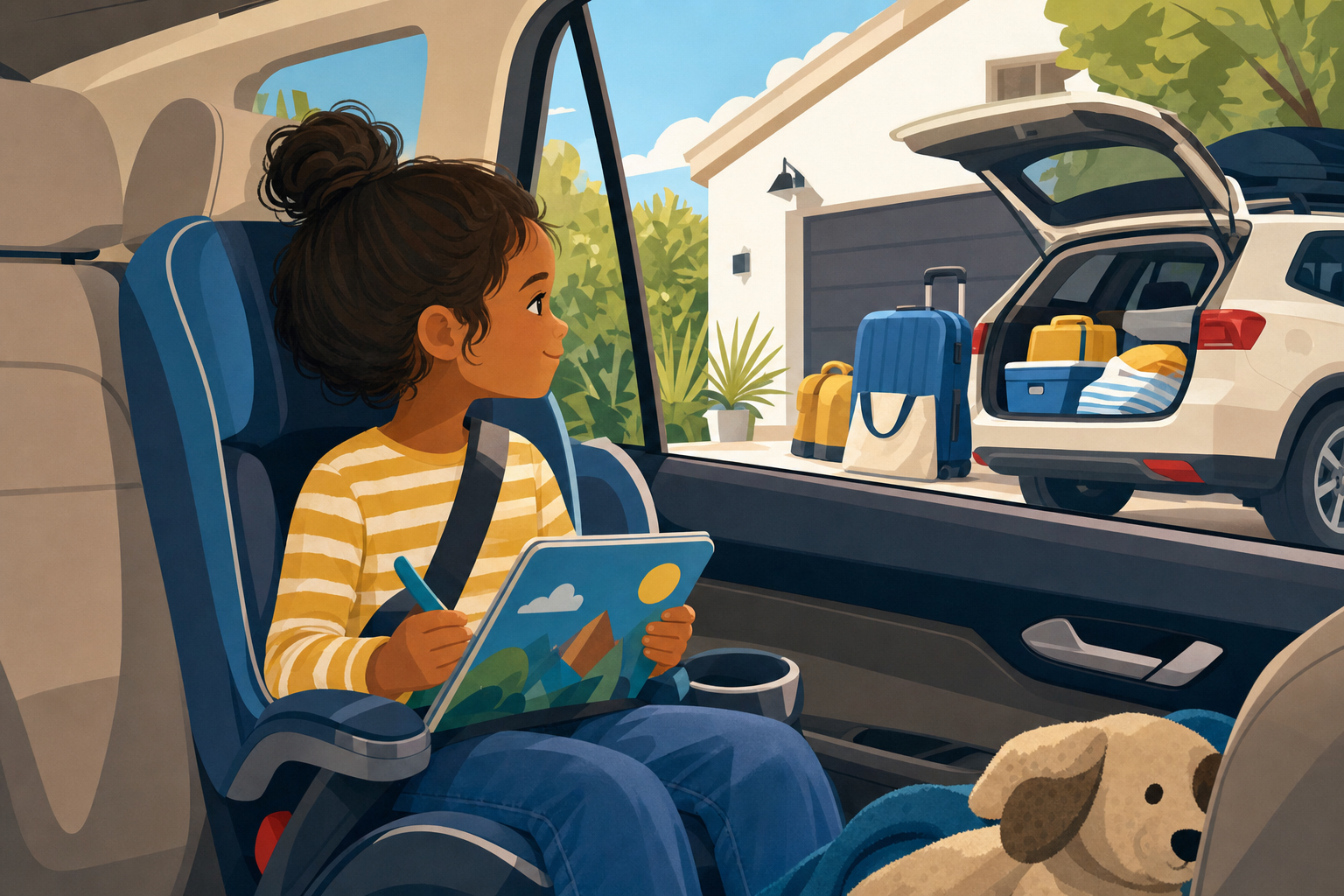
How to Keep a 3- to 6-Year-Old Entertained on a Road Trip When They Get Bored Before You Leave the Driveway
Your kid is buckled in, the car is packed, and you're still standing in the driveway frantically texting your partner about whether you remembered the phone charger. Meanwhile, your preschooler is already whining "Are we there yet?" and you haven't even backed out of the garage. This is the most maddening part of any road trip: the 10 to 20 minutes of waiting while you finish loading, argue about whether you locked the front door, and convince yourself you did turn off the stove.
Most road trip advice starts once the car is moving. But the pre-departure meltdown is real, and it sets the tone for the entire drive. Here's how to keep your 3- to 6-year-old calm, entertained, and settled during those last chaotic minutes before you actually hit the road.
Start With a Simple Pre-Drive Routine
Kids do better when they know what's coming. A quick verbal walkthrough before anyone gets in the car can prevent the "I didn't know we were leaving NOW" meltdown.
Try this: "We're going to get in the car, buckle up, and wait a few minutes while I finish packing. While we wait, you can look for red cars outside your window or count how many houses have flags. Then we'll start driving."
This gives them a job during the wait. It also frames the waiting as a normal, expected part of the trip, not a frustrating delay. Road trip pre-departure activities for kids don't have to be elaborate. They just need to fill the gap between buckling and moving.
If your child responds well to visual routines, you can extend the same approach you'd use for school-night task sequences to your departure checklist. A simple "buckle, wait, drive" sequence gives them something predictable to hold onto when everything else feels hurried.
Give Them a Waiting Job (Not a Toy)
Handing your kid a toy the second they sit down usually backfires. They drop it under the seat, fight over it with a sibling, or get bored in 90 seconds and demand something new. Instead, give them a task tied to the waiting itself.
Here are some kid travel wait time ideas that work:
- Window spotter: "Tell me when you see a dog, a blue truck, or someone on a bike."
- Countdown helper: "Count to 100 while I finish loading the cooler."
- Memory game: "Close your eyes and try to remember what color the house across the street is. Now open them and check."
- Guessing game: "Guess how many bags I'm going to put in the trunk. Let's count together when I'm done."
These are no-screen waiting games for kids in the car that keep their attention without requiring any supplies. The best part? They're short enough that you can cycle through two or three while you're still fussing with the luggage.
Use the First Five Minutes as a Settling Window
Once everyone is buckled, resist the urge to immediately start driving. Give your kid a minute or two to adjust to being strapped in. This is especially important for younger kids (3-year-olds especially) who need a beat to process the transition from "running around the house" to "sitting still in a confined space."
During this window, try a calm, low-energy activity:
- Breathing game: "Let's take three big breaths together. In through your nose, out through your mouth. Can you make your breath sound like the wind?"
- Body check: "Wiggle your toes. Now your fingers. Now scrunch up your shoulders and let them drop."
- Quiet observation: "Let's sit really still and see how many sounds we can hear. I hear a bird. What do you hear?"
This isn't just busy work. You're helping them regulate before the trip starts. Getting kids settled before a long drive prevents the antsy, overstimulated behavior that leads to "I need to get out!" meltdowns 10 minutes down the road.
Keep a Backup Surprise in the Front Seat
Sometimes, despite your best efforts, the wait drags on. Your partner can't find the keys. You realize you forgot to fill up the gas tank. Your preschooler's patience is gone.
This is when you need a secret weapon: a small, new-to-them item you can hand back without making a big deal about it. Travel boredom busters for 3 year olds don't need to be fancy. They just need to be unexpected.
Good options:
- A small pack of stickers (the puffy kind are harder to drop)
- A bendable pipe cleaner they can twist into shapes
- A small notebook and a chunky crayon
- A plastic animal or toy they haven't seen in a while
- Printable coloring pages from Chunky Crayon if you need a quiet, mess-light option
The key is not to say "Here's something to keep you busy for the whole trip." Just hand it back casually: "Oh, I almost forgot I had this. Want to hold it while we finish up?" This buys you another few minutes without inflating their expectations.
Try a Round of Road Trip Patience Games for Preschoolers
If you're really stuck waiting (maybe you're parked while your partner runs back inside for the third time), lean into simple call-and-response games that don't require any materials.
Here are a few that work well for what to do while waiting in the car for a road trip:
- I Spy (parked version): "I spy something red." Keep it to things visible from their car seat.
- Rhyme time: "I'm thinking of a word that rhymes with 'car.' Can you guess it?" (Star, jar, far, etc.)
- Opposite game: You say a word, they say the opposite. Big/small, hot/cold, fast/slow.
- Animal sounds: "What sound does a cow make? What about a firetruck? What about a whisper?"
- Story chain: You start a silly sentence ("Once there was a purple dinosaur who loved pizza"), they add the next part.
These car ride transition activities for kids work because they're verbal, interactive, and don't require your child to hold or manipulate anything. You can play them while you're half-distracted, and they're easy to stop the second you're ready to drive.
If your child tends to get wiggly or impatient during transitions, the same strategies that help with stopping play time without a meltdown can smooth out the shift from "standing in the driveway" to "sitting in the car."
What to Skip (Even Though You're Tempted)
When you're desperate, it's easy to reach for the nuclear option: hand them a screen, promise them candy, or let them unbuckle "just for a minute." Here's why those usually backfire:
- Screens too early: If you give them the tablet before the car even moves, you've blown your best tool. Save it for hour two, not minute two.
- Snacks before driving: Eating while the car is still parked often leads to spills, complaints, or a kid who's full before you've hit the highway. Wait until you're moving.
- Unbuckling: Even if you're parked, unbuckling teaches them that the car seat is optional. It's not worth the fight later.
Instead, save your big guns (screen-free activity bags, special snacks, new toys) for when you're actually on the road and need sustained entertainment.
The Real Goal: Get Out of the Driveway Without Tears
You don't need to entertain your kid for an hour before the trip starts. You just need to get through 10 to 20 minutes without a meltdown. A simple waiting job, a calming settling activity, and one backup surprise are usually enough to bridge the gap.
Once the car is moving, the rhythm of the road usually helps. But those first few minutes, when everyone is strapped in and nothing is happening yet, are the hardest. Treat them like their own mini-phase of the trip, not an afterthought. A little structure and a lot of patience go a long way.
And if all else fails? Start driving. Even if you forgot something. Even if you're not 100% sure you locked the door. Sometimes the best pre-departure activity is just leaving.