May 17, 2026
Screen-Free Car Activities for Toddlers: Long Road Trip Fun
Discover 15+ proven screen-free car activities perfect for toddlers and preschoolers on long drives. Keep kids 2-6 entertained with easy games parents love.
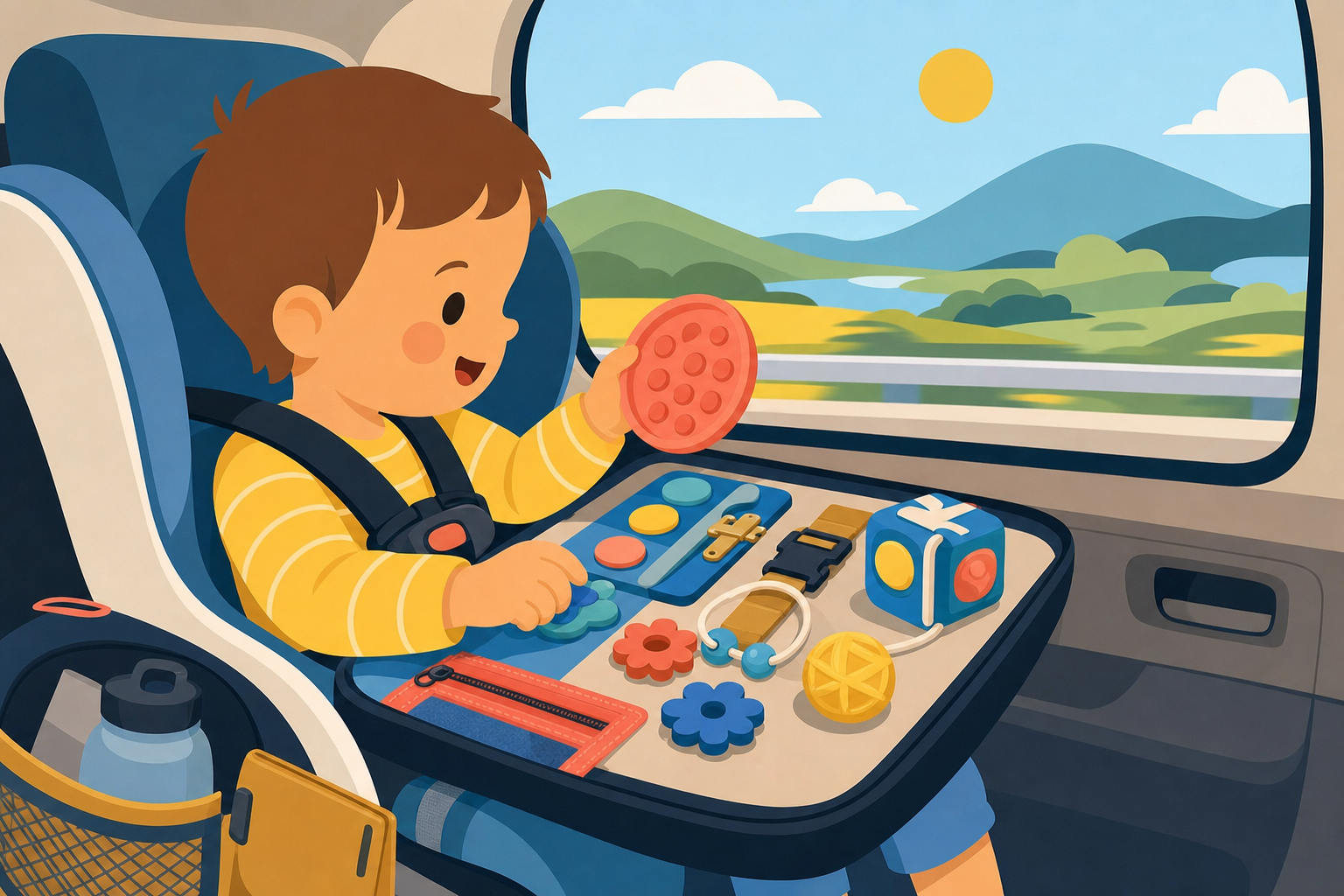
How to Keep a 2- to 6-Year-Old Entertained on a Long Car Ride Without Screens or Coloring
Your toddler just dropped their last snack under the seat, and you still have two hours to go. The tablet's dead, the crayons rolled away at the last gas station, and you're running out of ideas fast.
Long car rides with preschoolers are survival mode. Most generic lists assume your kid can sit still for audiobooks or play complex games, but the truth is different. A 2-year-old has the attention span of a goldfish. A 4-year-old will ask "are we there yet?" seventeen times in ten minutes. And a 6-year-old needs constant input or they'll start poking their sibling just to feel something.
Here's what actually works when you need screen-free road trip activities that don't require arts and crafts setup in a moving vehicle.
Talk-Based Games That Work for Different Ages
The best long car ride activities for toddlers are the ones you can start instantly with zero props. No setup, no lost pieces, no "Mom, I dropped it."
For 2- to 3-year-olds: Keep it concrete and immediate. "I Spy" works if you stick to colors only: "I spy something blue." Point out trucks, cows, or signs as you pass them. Sing the same song on repeat (yes, it'll drive you nuts, but repetition is soothing for this age). Try simple call-and-response: you say "Moo," they guess "Cow!"
For 4- to 5-year-olds: Graduate to "I Spy" with first letters if they're learning the alphabet. Play 20 Questions with a narrow category: "I'm thinking of an animal." Ask them to name every kid in their class, every food they hate, or every toy they own. The goal isn't the answer. It's burning time.
For 6-year-olds: Story chains work well here. You start a story with one sentence, they add the next, back and forth. "Once there was a dragon who was afraid of clouds." "The clouds were actually made of cotton candy." It gets silly fast, which is the point.
These travel activities for preschoolers don't feel like "activities" to kids. They feel like normal conversation, which means less resistance and more buy-in.
Sensory and Movement Activities (Yes, Even in a Car Seat)
Toddlers and preschoolers are physically driven. Asking them to sit perfectly still for three hours isn't realistic. Instead, give them small, contained ways to move.
Bring a small ziplock bag of textured items: a smooth rock, a piece of felt, a jingly bell, a bumpy ball. Let them explore one at a time in their lap. It's not exciting, but it's novel, and novelty buys you 10-15 minutes of focus.
Play "Simon Says" adaptations: "Touch your nose. Pat your knees. Wiggle your toes." Keep movements small and seat-safe. No jumping, obviously, but stretching arms up, making faces, or squeezing fists all count.
For quiet car activities for toddlers, try texture scavenger hunts using what's already in the car. "Find something soft. Find something cold. Find something that makes noise." A blanket, a water bottle, a plastic bag. Done.
Pack a small "busy bag" with pipe cleaners (they bend into shapes), large plastic clips (they snap onto each other or the car seat straps), or a 6-inch string they can practice tying knots with. These work best for 4- to 6-year-olds who can manipulate small objects without putting them in their mouth.
Snack Activities (Not Just Snacks)
Snacks are a given on road trips, but you can stretch their entertainment value if you're strategic.
Turn snacking into a sorting game. Give them a small container of Cheerios and two cups. "Put the round ones here, the broken ones here." Yes, they're all round. Your preschooler won't notice for a solid five minutes.
For 3- to 6-year-olds, try "build a face" snacks. Pretzels for eyes, raisins for a nose, Goldfish for a mouth, all arranged on a napkin in their lap. They eat it when they're done. Zero cleanup.
Pack snacks that take time to eat: string cheese that needs peeling, clementines they have to unwrap, grapes they eat one at a time while counting. The slower, the better.
Don't dismiss food as a serious part of your no screen road trip ideas. A toddler chewing slowly is a toddler not whining.
Window Games That Actually Hold Attention
Car windows are free entertainment if you frame it right. Most kids won't stare out the window for fun, but they will if there's a challenge.
Color hunts: Call out a color, they find it outside. "Find something red!" Barns, cars, signs all count. When they spot it, call out a new color. Rotate who picks the next color to keep everyone involved.
Count-offs: Pick a category and count together out loud. Count every truck. Count every yellow car. Count every tree with no leaves. You'll lose track around 30, but that's fine. Start over or switch categories.
License plate games (simplified): For 5- to 6-year-olds learning letters, just spot letters they know. "Find an A! Find a T!" Don't worry about states or full words yet.
Construction site watch: If you pass any roadwork, make a huge deal out of it. "Do you see the excavator? What's it doing?" Preschoolers love heavy machinery. Narrate it like a nature documentary.
These car games for 3 year old and older kids feel active, even though they're sitting still. The key is giving them something specific to look for, not just "look out the window."
Rotate Activities Every 15-20 Minutes
Here's the hard truth: no single activity will entertain a toddler or preschooler for a full hour. Their brains aren't wired that way yet.
Plan to switch gears every 15 minutes. Do a round of "I Spy," then switch to a snack activity, then a movement game, then back to window watching. Rotation prevents burnout (theirs and yours).
Keep a mental list of 8-10 activities and cycle through. When one stops working, don't push it. Move on immediately. Fighting a bored preschooler is harder than just pivoting to the next thing.
If you use routines at home (like a morning routine chart to keep kids on track without nagging), the same principle applies here. Predictable rotation creates a rhythm, even in the car.
Build in Real Breaks (Even If It Adds Time)
This isn't an activity, but it matters. Toddlers and preschoolers can't white-knuckle a four-hour drive. Plan a 10-minute break every 90 minutes where they get out and actually move.
Rest stops, gas stations, empty parking lots, it doesn't matter. Let them run in circles, jump, climb on a curb, or kick a ball if you brought one. Physical release resets their nervous system.
Yes, it adds 20-30 minutes to your total drive time. But the alternative is a meltdown at hour three that derails everything anyway.
If you're working on behavior management at home (like using a reward chart to reinforce good choices), consider a simple car version: "Every time we stop, if you stayed mostly calm, you get a sticker." Cash in stickers for a small treat at the destination.
When All Else Fails: Narrate Everything
Sometimes you run out of games, snacks, and goodwill. Your kid is done, you're still an hour from home, and nothing is working.
Just talk. Narrate what you see outside like you're recording a podcast. "Oh, look at that red barn. I wonder if they have chickens. Do you think chickens like to swim? Probably not, they'd get their feathers wet."
It sounds absurd, but preschoolers find your voice soothing even when they're overstimulated. The content barely matters. You're just filling the silence with something other than whining.
Describe the road, the clouds, the cars passing. Ask questions you don't expect answers to. "Why do you think that truck is purple? Where do you think it's going?"
This works for long drive with kids activities when you've truly exhausted everything else. It's not flashy, but it's effective.
One More Quiet Option
If your child does well with independent tasks and you need a true quiet stretch, printable coloring pages from Chunky Crayon work on a lap desk or hard clipboard (though that technically breaks our "no coloring" brief, so save it as a backup plan).
You'll Get There
Long car rides with little kids are hard, full stop. No blog post can make them easy. But with a mix of talk-based games, sensory activities, strategic snacks, and regular breaks, you can get through it without screens or a full craft kit.
The goal isn't perfect behavior. It's survival. You're doing fine.