August 15, 2026
Toddler Road Trip Kit: Pack a Screen Free Car Bag
Build a screen free toddler road trip kit with our packing checklist, snack box tips, and mess free car activities for kids ages 2 to 6.
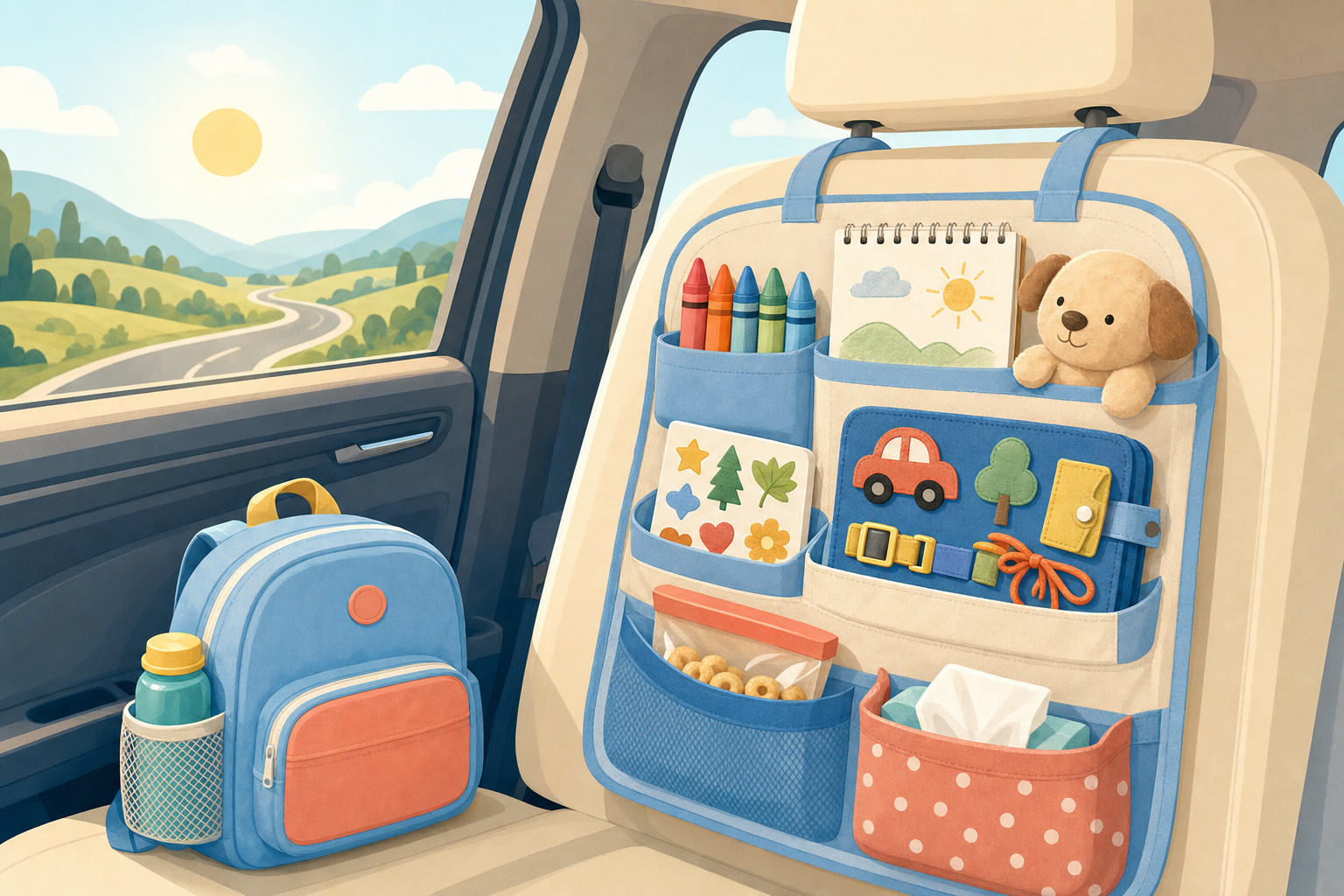
How to Pack a Toddler Road Trip Kit for a 2- to 6-Year-Old (Without Overpacking or Underpacking)
You're loading the car at 6 a.m., the toddler is already asking "are we there yet," and you're holding a tote bag that either has way too much stuff or nowhere near enough. Most road trip packing lists tell you to bring "snacks and toys." That's not a plan, that's a shrug.
What actually works for a 2- to 6-year-old is a three-tier system: a carry-on bag, a car caddy, and a backup stash. Each one has a job. Once you know what goes where, packing takes fifteen minutes and you stop digging through a diaper bag at 70 miles per hour looking for the one toy that will stop the crying.
The Three-Bag System (And Why One Bag Isn't Enough)
A single bag fails because a toddler's needs change by the hour, not by the trip. You need something for the first 20 minutes (novelty), something for the long middle stretch (boredom), and something held in reserve for when everything else has failed (meltdown territory).
- Carry-on bag: lives at your feet or the kid's feet, packed the night before, grab-and-go.
- Car caddy: a seatback organizer or bin that stays within arm's reach the entire trip.
- Backup stash: sealed, in the trunk or glovebox, opened only when things go sideways.
This is the core of any real road trip packing checklist for toddlers. Everything below fits into one of these three spots.
What Goes in the Carry-On Bag
This bag holds what your child needs the second they're buckled in, before the car even leaves the driveway. Keep it small, one bag per kid, nothing that needs assembly.
- A favorite small stuffed animal or lovey
- A soft book or two (board books survive kicks and drops)
- A refillable water bottle with a straw lid
- One brand-new, never-seen-before toy (dollar store finds work great, the novelty matters more than the price)
- A small pack of wipes and a spare outfit in a gallon bag
The new-toy trick is underrated. A child doesn't know if a toy is worth $2 or $20, they only know they've never seen it before, so save it for the moment the initial excitement of "we're going on a trip!" wears off, usually around mile 15.
The Car Caddy: What Stays Within Reach
The car caddy is where most parents overpack. A seatback organizer with pockets, or a shoebox-sized bin that wedges between car seats, works better than a big bag they can't reach on their own. The goal is independence: a 4- or 5-year-old should be able to grab what they want without asking you to pass it back.
Good car caddy contents for screen free car activities for toddlers:
- A clipboard with paper and crayons (the clipboard prevents the "I can't draw, it's bumpy" complaint)
- Reusable sticker books (peel-and-stick pages kids can rearrange endlessly)
- A small tin of magnetic travel toys or a magnetic drawing pad
- Window clings (they stick to glass, peel off clean, no mess)
- A soft, quiet fidget toy or squishy ball
For mess free travel activities for kids, skip anything with loose small pieces (Legos, beads, stickers that peel off backing paper and end up on the seat) unless it's contained in its own case. Reusable and wipeable beats anything with crumbs, glitter, or glue.
If you're covering car activities for 2 year olds specifically, keep the caddy simpler: board books, one soft toy, a texture ball, and a snack cup. Two-year-olds get overwhelmed by too many choices and will dump everything on the floor within five minutes anyway.
For longer stretches where you're the only adult managing everything from the front seat, this guide on keeping a 3- to 7-year-old entertained on a road trip with one parent has activity ideas that pair well with whatever's already in the caddy.
The Backup Stash: Your Emergency Reserve
This is the part most packing lists skip entirely, and it's the part that saves the trip. The backup stash lives in the trunk, sealed, and only comes out when the caddy toys have lost their magic and you're still two hours from the next stop.
Pack it with things that feel like a genuinely new event, not more of the same:
- A dollar-store activity book with fresh stickers or a sticker-by-number page
- A small, sealed pack of playdough (works fine on a lap tray or clipboard)
- A surprise snack that's different from what's in the regular snack box
- A short audio story or song playlist saved offline, for screen free car activities for toddlers that still feel special
Treat this stash like a reset button. Pulling it out signals "something new is happening" even on hour four of a six-hour drive.
Kids Road Trip Snack Box: The Rules That Actually Prevent Meltdowns
Snacks deserve their own container, separate from toys, because hunger and boredom look identical in a toddler and you need to be able to tell them apart fast.
- Use a divided container (a muffin tin with a lid, or a bento box) so each snack has its own compartment and nothing spills.
- Pack low-mess, low-sugar options: pretzels, cheese cubes, dry cereal, apple slices, crackers.
- Portion snacks into small cups or bags ahead of time so kids self-serve without needing your help.
- Rotate two or three snacks throughout the trip instead of laying them all out at once. Novelty stretches further than quantity.
- Keep one "special" snack in the backup stash for true emergencies (a lollipop, a small treat) separate from the regular rotation.
A well-built kids road trip snack box does double duty: it buys quiet time and it prevents the low-blood-sugar meltdowns that no toy can fix.
Preschool Road Trip Checklist by Age
A family road trip packing list that treats a 2-year-old and a 6-year-old the same will fail one of them. Quick adjustments:
- Age 2 to 3: fewer choices, more sensory items (textures, soft books, a favorite lovey), shorter attention spans mean you'll cycle through the caddy faster.
- Age 4 to 5: add simple activity books, reusable stickers, and "job" toys like a toy steering wheel or clipboard checklist to make them feel involved.
- Age 6: they can handle real activity books, simple travel games, and short independent projects like a scavenger hunt list taped to the window.
If your child is picky about eating on the go too, the ideas in this no-prep guide to keeping kids busy at restaurant meals translate well to rest stop breaks and drive-thru pit stops.
One Quiet Backup for the Whole Trip
When everything else has been used up and you still have miles to go, printable coloring pages from Chunky Crayon make a solid, quiet, mess-light addition to the backup stash. They print at home in minutes, need nothing but crayons you already packed, and buy you real quiet time without a screen.
If your trip ends at a hotel instead of straight home, keep the same three-bag mindset going. This guide to screen-free hotel room activities for toddlers picks up right where the car caddy leaves off.
Pack once, sort into three spots, and you'll spend the drive watching mile markers instead of digging through a bag on the floor.