June 5, 2026
Ferry Ride Activities for Toddlers: Screen-Free Fun Guide
Discover 15+ quiet, low-mess activities to keep toddlers and preschoolers entertained on ferry rides. No screens, no meltdowns, just easy games parents love.
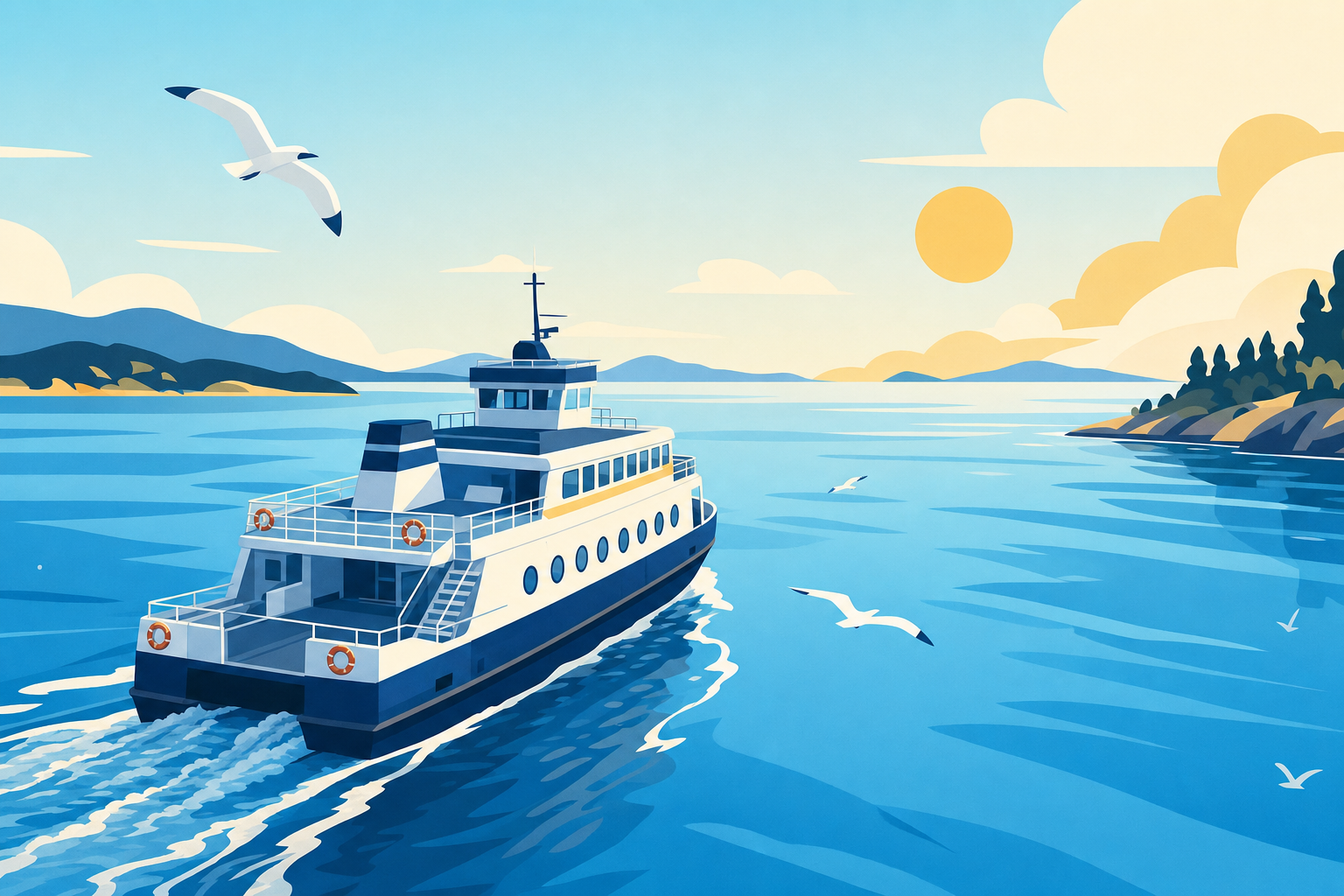
How to Keep a 2- to 6-Year-Old Busy on a Ferry Ride Without Screens, Coloring Pages, or a Meltdown
You're standing in the car deck line with a restless toddler, 45 minutes from boarding, and the ferry crossing is 90 minutes. No playground, no real space to run, and if you drop something it's probably gone forever into the gap between the boat and the railing.
Ferry rides hit different than road trips. The movement is unpredictable, the space is confined, and you can't just pull over. Most ferry ride activities for toddlers assume you have table space or that your kid will sit still. Spoiler: they won't.
Here's what actually works when you need screen-free travel games for kids in a setting where everything has to stay attached to your body or zipped into a bag.
Pack a Clip-On Activity Bag (Nothing Loose)
The first rule of ferry entertainment: if it can roll, blow away, or drop overboard, leave it home. Low-mess travel activities for 2 year olds on a ferry need to be tethered, chunky, or sticky.
Pack a small crossbody bag or clip-on pouch with:
- A spiral-bound notepad (the wire keeps pages together)
- Chunky crayons or pencils (regular crayons snap and roll; skip them)
- A small container of playdough with a lid that snaps shut
- Reusable sticker books (the kind where stickers stick to the background, not your jacket)
- A laminated photo sheet of family, pets, or favorite toys for a homemade "I Spy" game
Everything stays in the bag or clipped to a carabiner on your belt loop. When your kid drops the crayon (they will), it's still attached.
If your ferry has indoor seating, printable coloring pages from Chunky Crayon pair well with a clipboarded surface and a single jumbo crayon. Keep the whole stack clipped so the wind doesn't scatter them.
Play Verbal Games That Work in Motion
What to pack for a ferry with kids matters, but half the battle is what you don't need to pack. Quiet travel activities for young children on a ferry often look like no-prep verbal games that work while you're both standing at the railing or sitting on a bench.
Try these:
- I Spy, ferry edition: "I spy something blue" (the water, a jacket, a car on the deck). Keep it simple for 2- to 3-year-olds; let older kids guess colors, shapes, or "something that moves."
- Counting game: Count boats, seagulls, windows, cars with kids inside. Give your child a specific job ("You count the red cars, I'll count the white ones").
- Sound hunt: "What do you hear?" (engine rumble, seagulls, wind, people talking). Name three sounds, then switch.
- Silly story chain: You start a sentence ("Once there was a bear on a boat"), your child adds the next part ("and he was eating a banana"). Keep it going as long as they're engaged.
These work whether you're inside, outside, or stuck in the car waiting to disembark. For a deeper list of no-equipment verbal games, check out 50+ no equipment car games kids will love (most translate directly to ferry settings).
Give Them a Job (Physical + Low-Risk)
Preschool ferry entertainment is easier when your kid feels like they're doing something useful. Two- to six-year-olds love tasks that feel grown-up, even if the task is invented.
Assign them:
- Ferry lookout: "Tell me when you see land" or "Tell me when you see another boat."
- Snack manager: Let them hold the snack bag and hand out crackers one at a time (to themselves, to you, to a sibling).
- Weather reporter: "Is it windy? Is the water bumpy or smooth? Are there clouds?" Let them narrate what they observe.
- Photo assistant: If you're taking pictures, let them hold your phone case or press the button while you point the camera. (The phone stays in your hand.)
The job doesn't have to be real. It just has to make them feel like they're contributing, which buys you 10 to 15 minutes of focus.
Use the Environment (Deck, Railing, Windows)
Ferries have built-in entertainment that costs nothing: water, boats, birds, and the sensation of movement. No-prep travel games for ferry rides often come from just pointing stuff out and turning it into a game.
If you're outside on the deck:
- Stand at the railing and watch the wake (the white foamy trail behind the boat). Count waves, look for fish (you won't see any, but the looking is the activity).
- Watch for birds. Seagulls follow ferries. Play "freeze when you see a bird" or "flap your arms like a seagull" (quietly, so you don't alarm other passengers).
- Let them feel the wind. Hold their hand and let them lean gently into it (while you anchor them). It's a sensory experience that feels like a big deal to a toddler.
If you're inside:
- Sit by a window and narrate what you see (other boats, the shoreline, docks, buoys).
- Play "first one to spot land" (you can rig this so they always win).
- Count cars on the car deck if you can see down into it from the passenger area.
If your kid gets restless and needs to move, walk the interior hallways or stairwells (if safe and allowed). One lap burns energy and feels like an adventure. For more ideas on managing restlessness in confined travel spaces, travel routines that keep kids regulated on long trips apply here too.
Bring Snacks That Double as Activities
Kids travel activity bag for boat rides should include snacks that take time to eat. Avoid anything crumbly (seagulls will mob you) or sticky (no napkins when you need them).
Best ferry snacks:
- String cheese (peel-apart = activity)
- Grapes or berries in a sealed container (count them, sort by color, eat them one at a time)
- Goldfish crackers in a small container with a lid (shake it like a maraca, then eat them)
- Pretzel sticks (stack them, break them, build a tiny tower on your lap)
- Raisins or dried fruit (count them into piles, eat the piles)
The slower they eat, the longer you have. Make it a game: "Can you eat this grape in five tiny bites?" or "Let's see if you can peel this cheese in one long strip."
What to Do If the Ferry Gets Rough (or They Get Scared)
Ferries rock. Sometimes the water is choppy, the boat sways, and your kid gets nervous or nauseous. Have a plan for this before it happens.
If they're scared:
- Sit down together and narrate what's happening ("The boat is rocking because of the waves. Boats are made to rock. We're safe.").
- Distract with a tactile task: squeeze playdough, hold a small stuffed animal, press their hands into your palms.
- Avoid the windows if the view makes it worse. Face them toward the interior of the boat where everything feels more stable.
If they're queasy:
- Get outside if possible (fresh air helps).
- Have them look at the horizon, not at the water directly below.
- Avoid food until the motion settles, but keep water nearby.
- Sit near the middle of the boat where the rocking is less intense.
The goal is not to eliminate the discomfort, just to give them something else to focus on. Sometimes that's your voice, your hand, or the game you invent on the spot.
Create a Ferry Routine (Even If It's a One-Time Trip)
Kids do better when they know what to expect. Even on a single ferry ride, a loose routine helps them regulate.
Your ferry routine might look like:
- Board and find a seat (or a spot on the deck).
- Snack time while the boat starts moving.
- Walk to the railing to watch the wake.
- Play a verbal game or do a quiet activity in your seat.
- Second snack or playdough time.
- Look out the window for land.
- Gather belongings and prepare to disembark.
You don't need to announce all of this. Just move through it in order so they feel the rhythm. Predictability reduces meltdowns, even in a new environment.
When Meltdowns Happen Anyway
Sometimes your kid will lose it on a ferry. It's loud, it's crowded, it's overstimulating, and there's no escape hatch. You can't pull over. You can't leave. You just have to ride it out.
If they melt down:
- Find the quietest corner you can (a stairwell landing, an empty row of seats, the outdoor deck if it's not too windy).
- Sit with them. Don't try to logic them out of it or distract them immediately. Just be present.
- Offer physical comfort if they want it (hug, lap sit, hand hold). If they don't, give them space but stay close.
- Wait for the wave to pass. It will pass. Then offer water, a snack, or a simple yes/no choice ("Do you want to sit here or walk to the window?").
Meltdowns on ferries feel worse because other people are watching. But those people have also been stuck on a boat with a screaming kid at some point. You're doing fine.
Real Talk: Ferry Rides Are Short (You Can Survive This)
Most ferry rides are 30 to 90 minutes. That's shorter than a toddler nap, shorter than a grocery trip with a cart full of returns, shorter than the last 20 minutes before bedtime when everyone is losing it.
You don't need to fill every second with an activity. You need two or three solid tactics, a snack buffer, and the willingness to walk laps if necessary. The rest will sort itself out.
If you're planning a longer trip with multiple transportation modes, grab a printable road-trip activity pack from Kids Road Kit. It's free, it's designed for the age of your kid and the length of your trip, and it works in cars, ferries, and anywhere else you need a child to stay engaged without a screen. You'll survive this ferry ride. And the next one will be easier.