June 1, 2026
No Equipment Car Games: 50+ Verbal Games Kids Will Love
Discover the best talking road trip games that need zero supplies. These verbal car games for kids turn boring drives into fun family bonding time.
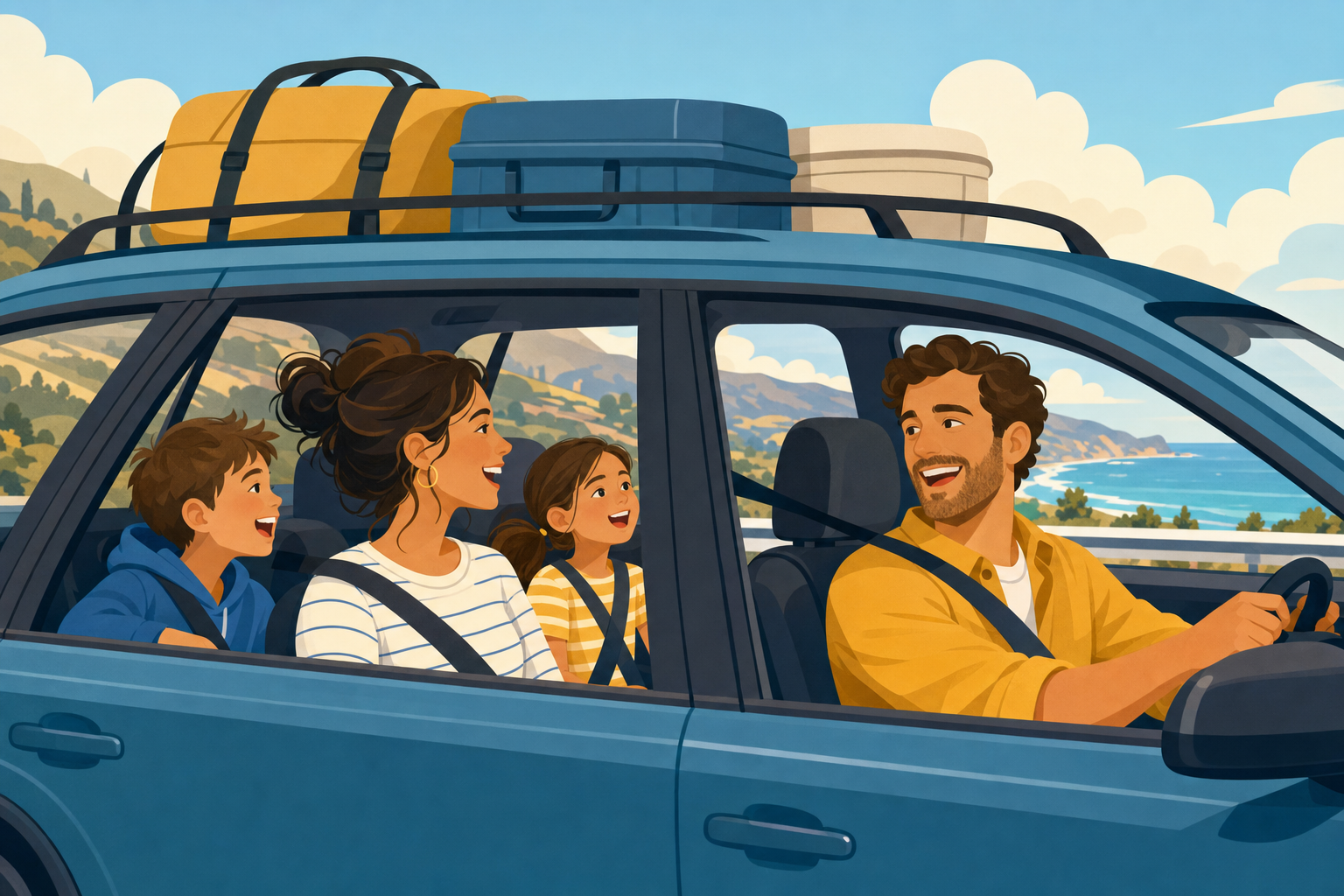
Car Games for Kids That Don't Need Anything But Talking
You're 45 minutes into a two-hour drive and your kid is kicking the seat back, asking if you're there yet. You forgot the activity bag. Your phone is at 12%. You need something, right now, that requires zero supplies and keeps them quiet for at least ten minutes.
Verbal car games kids actually enjoy are your best friend in this moment. No equipment car games save you when you've run out of snacks, screens, and patience. These talking road trip games work because they're easy to start, easy to pivot, and they buy you miles of peace.
Here are the ones that actually work, sorted by what you need most: distraction, laughter, or just some quiet focus.
Games That Buy You 15+ Minutes of Focus
These verbal car games keep kids thinking without needing your constant participation. You can drive, they can play, everyone wins.
20 Questions is the MVP of no equipment car games. One person thinks of an animal, object, or person. Everyone else gets 20 yes-or-no questions to guess it. If your kid picks "dog" every single time, that's fine. Let them win. The goal is quiet focus, not originality.
I Spy works best when you add a twist. Standard "I spy with my little eye something blue" gets old fast. Try "I spy something that starts with the letter T" or "I spy something a farmer would use." It forces them to think harder and keeps the game from cycling through the same three things they can see.
The Alphabet Game (road sign version): Find words on signs, license plates, or billboards that start with each letter, A to Z. Younger kids can team up with you. Older kids can compete. Q, X, and Z will cause arguments. Let them count "exit" for X and move on.
The License Plate Game has two versions. Easy mode: spot plates from as many states as possible. Hard mode: make up a story about where that car is going based on the letters or numbers. A plate that says "3R2D2" is clearly a family of robots going to visit their grandma droid.
If you're driving solo with kids and need something that holds their attention longer, check out these one-handed games that don't require you to turn around.
Games That Make Them Laugh (and Forget They're Bored)
These talking road trip games are louder but they burn energy and reset the mood when everyone is getting cranky.
The Rhyme Game: You say a word. They have to come up with a rhyme. Go back and forth until someone gets stuck. Start with easy words like "cat," "dog," "run." If they say a nonsense word that technically rhymes, count it. You're not teaching poetry, you're surviving a car ride.
Would You Rather: Give them two ridiculous options. Would you rather have spaghetti for hair or syrup for sweat? Would you rather fight one horse-sized duck or 100 duck-sized horses? Let them make up their own. The weirder, the better. This is a great game for siblings because they'll try to out-gross each other and forget to fight.
Fortunately/Unfortunately: You start a story with one sentence. The next person adds a sentence that starts with "fortunately." The next adds one starting with "unfortunately." Example: "We were driving to the beach." "Fortunately, we packed sandwiches." "Unfortunately, a seagull stole them." "Fortunately, we had backup snacks." It gets absurd fast and kids love it.
The Banana Game: Every time you see a yellow car, everyone shouts "BANANA!" First person to spot it gets a point. This is mindless, loud, and highly effective at keeping kids glued to the window. If yellow cars are rare where you live, pick a different color or switch to counting red trucks.
Games That Sneak in Learning (Without Them Noticing)
These no equipment car games keep kids busy while also working their brain in ways that feel like play, not school.
Category Game: Pick a category (animals, foods, things that are cold, things you find at the beach). Take turns naming something in that category. If someone repeats or can't think of one, they're out. Last person standing wins. This works for ages 3 to 10 if you adjust the categories. Toddlers can do "animals." Older kids can handle "animals that live in the ocean and have scales."
Story Chain: You start a story with one sentence. The next person adds a sentence. Keep going until the story ends or falls apart. Younger kids will add random things ("And then a dinosaur showed up"). Older kids will try to make it make sense. Both are fine. The goal is keeping them talking, not winning a writing award.
Geography Game: Start with a place (your hometown, Disney World, the moon). The next person names a place that starts with the last letter of the previous place. Example: Texas, Seattle, Egypt, Toronto. If your kid only knows three place names, let them repeat. If they insist "Targét" counts as a place, sure, fine, it's in France.
What's That Job? Point out people you pass (construction workers, delivery drivers, someone mowing a lawn). Ask your kid what they think that person's job is and what they do all day. This works for toddlers ("That person drives a big truck!") and older kids ("Why do you think someone would want to be a garbage truck driver?").
For more ways to keep younger kids engaged without needing to pack anything, these no-prep car games for toddlers and preschoolers are worth bookmarking.
When Talking Games Aren't Enough
Verbal car games are great, but they're not magic. If your kid has been in the car for two hours, no amount of "I Spy" will fix it. That's when you need to stop. Seriously. Pull over at a rest stop, let them run in circles for five minutes, and reset. How often you stop depends on their age, but the rule of thumb is every 90 minutes for kids under 8.
If you're stuck in traffic or still have a long stretch ahead, quiet activities help bridge the gap. Printable coloring pages from Chunky Crayon are a good backup when talking games run out of steam. Pair them with a clipboard and you've bought yourself another 20 minutes.
Games That Work for Mixed Ages
If you have a 4-year-old and an 8-year-old in the backseat, most games will end in a fight because one kid is bored and the other is lost. These talking road trip games level the playing field.
Two Truths and a Lie: Each person says three statements. Two are true, one is a lie. Everyone else guesses the lie. Younger kids will make obvious lies ("I am a unicorn"). Older kids will try to trick you. Both versions work.
The Question Game: One person asks a question. The next person has to answer with a question. Keep going until someone answers with a statement or repeats a question. Example: "Are we there yet?" "Do you think we're there yet?" "Why are you asking me?" "Why are you asking me?" It's silly, it works, and it keeps both kids engaged.
Singing Telephone: Whisper a song title to one kid. They hum or whistle it to the next person. That person guesses the song. If they're right, they pick the next song. If they're wrong, chaos. Younger kids can hum "Twinkle Twinkle." Older kids can try something harder. Everyone gets a turn.
What to Do When They Say "I'm Bored" Again
They will. Even after 20 Questions, the Banana Game, and a snack stop. Here's what works: let them be bored. Give them five minutes of staring out the window. Sometimes they'll come up with their own game. Sometimes they'll just zone out. Both are fine.
If five minutes of silence turns into whining, rotate through games faster. Play one for three minutes, switch to another. The variety helps more than dragging out a game they're done with.
And if all else fails, you're almost there. Probably. Maybe. At least closer than you were when you started.