August 17, 2026
What to Pack in a Kid Plane Bag (Ages 2 to 7)
A screen-free carry-on packing list for kids ages 2 to 7 with quiet travel games and airplane activities. Get the full checklist inside.
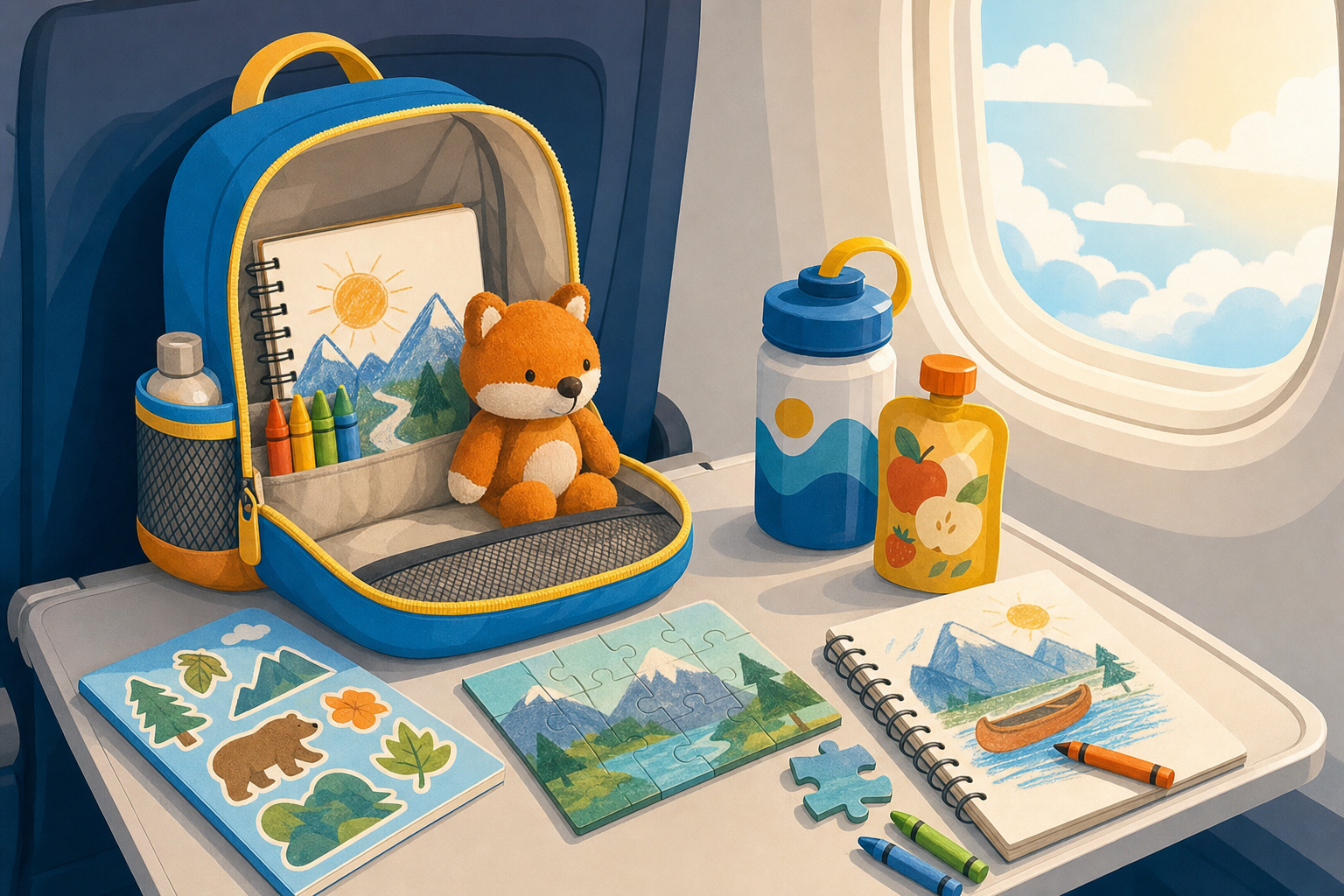
What to Pack in a Kid Plane Bag: A Screen-Free Carry-On System for Ages 2 to 7
You're standing at the gate with a diaper bag, a car seat, a stroller, and a kid who just realized boarding means sitting still. The tablet is charged, sure, but you wanted a backup plan that doesn't involve a screen for three straight hours. Most packing lists just tell you to bring "quiet activities" without saying which ones actually survive a seatback tray table and a kid who's already tired of sitting.
This is a system, not a list. It's built around how much space you actually have (not much), how loud things can be (not at all), and what changes as your kid gets older. Here's how to build a kid plane bag that works from boarding through descent.
The 3-Zone Packing System
Instead of tossing in random toys, sort everything into three zones based on flight phase. This keeps you from digging through a bag mid-flight while a kid melts down over the wait.
Zone 1: Boarding and taxi (0 to 20 minutes)
Kids are still excited and a little wound up. Save the good stuff for later and use this window for something simple:
- A window clip toy or small fidget
- A "first activity" card game like Go Fish or War
- A snack they have to unwrap or peel (this buys real time)
Zone 2: Cruising altitude (the long middle stretch)
This is where boredom sets in hardest. Rotate two or three activities here instead of handing over everything at once:
- A magnetic travel game (checkers, tic-tac-toe)
- Reusable sticker books or wipe-clean activity pads
- A small container of building blocks or Lego that fit on a tray table
- Printable coloring pages (more on this below)
Zone 3: Descent and landing
Ears are popping, patience is gone, and everyone wants off. Keep something novel in reserve that hasn't been used yet:
- A brand-new (to them) small toy or puzzle, wrapped so unwrapping becomes part of the activity
- Gum or a chewy snack for ear pressure (age 4+)
- A "finish the trip" sticker reward they've been working toward the whole flight
What Actually Belongs in the Bag by Age
Generic packing lists treat a 2-year-old and a 7-year-old the same way. They shouldn't be packed the same way at all.
Ages 2 to 3
- Board books, not picture books with fragile pages
- Soft, squeezable toys that won't hurt if thrown (they will be thrown)
- Sticker sheets and a small notebook, nothing with tiny loose pieces
- A comfort item you're not afraid to lose
Ages 4 to 5
- Wipe-clean activity books (mazes, dot-to-dot, simple counting)
- A small set of animal or vehicle figures for pretend play
- Magnetic drawing boards, which solve the mess problem completely
- Reusable window clings for seatback trays or windows
Ages 6 to 7
- Travel-size card games (Uno, Spot It)
- A notebook and colored pencils for drawing or simple journaling
- Compact puzzle books (word searches, connect the dots)
- A small trivia or riddle book you read aloud together
If you're also planning ground time before or after the flight, the same age-based thinking applies to what you bring into the terminal. A screen-free airport activity pack for kids ages 3 to 6 covers gate-side waiting specifically, which is a different problem than keeping a kid busy once you're buckled in.
Quiet Games That Don't Need Any Supplies
Some of the best plane activities take up zero carry-on space because they're just games you play out loud, quietly.
- 20 Questions: pick an animal, food, or person and let them guess with yes/no questions.
- I Spy, plane edition: "I spy something blue" works even in a tiny cabin with limited scenery.
- Whisper story chain: take turns adding one sentence to a made-up story, whispered so it doesn't bother nearby passengers.
- Finger tapping patterns: tap a rhythm on the tray table and have them copy it back.
These cost nothing, weigh nothing, and work when you've used up everything in the bag and still have 40 minutes left. If your child does better with structure than open-ended games, a printable scavenger hunt style checklist (spot a flight attendant, spot a red suitcase, spot clouds) gives the same low-prep payoff without needing supplies either.
The Coloring and Quiet-Hands Layer
Crayons alone are risky on a plane (broken tips, waxy marks on tray tables), but coloring itself is still one of the most reliable quiet activities you have. The trick is choosing the right format: a clipboard, a few loose pages, and a small case of twist-up crayons that won't roll under the seat.
Printable coloring pages from Chunky Crayon are a good option to print at home before you leave since you can pick pages that match your kid's interests (dinosaurs, space, animals) instead of grabbing whatever's left at the airport gift shop. Print a few extra so you have backups if the flight runs long or a page gets crumpled.
Packing It So You Can Actually Find Things
The bag itself matters as much as what's in it. A deep backpack where everything sinks to the bottom is a recipe for a meltdown while you're digging for the one toy that will fix things.
- Use a clear pencil case or small zippered pouch for each zone (boarding, cruising, descent) so you grab the right one without searching.
- Keep snacks in a separate pouch from toys so crumbs don't end up on activity pages.
- Pack one thing per pouch that's genuinely new or novel. Kids notice repeat toys fast, and novelty buys more quiet minutes than quantity does.
- If you're flying with more than one kid, don't pack identical items. Overlapping interests plus proximity is a fast track to a fight over whose sticker book is whose, similar to the dynamic covered in a sticker chart for siblings who fight.
A Few Extra Airport Actions Before You Board
A lot of the pre-flight meltdown potential gets defused on the ground, not in the air. If you have any layover time or an early arrival, physical movement matters more than any toy in the bag. A quick walk to a window with planes taking off, a stop at a play area if the terminal has one, or even a lap around the gate area can burn off the wiggles that would otherwise show up mid-flight. For longer connections, the same low-supply approach used to survive a layover with almost nothing works well here too, since it's built around games rather than gear.
The Bottom Line
You don't need a suitcase full of toys to get through a flight without screens. You need a small, sorted system: something simple for boarding, a rotation for the long middle, and one saved-up surprise for the hard final stretch. Pack by age, keep zones separate, and lean on no-supply games when the bag runs dry. That's the whole system, and it fits in one backpack pocket.