July 7, 2026
Screen-Free Car Activities for Kids Who Get Carsick
Discover non-visual car games and activities perfect for kids with motion sickness who can't read or look out the window. Keep them entertained on every trip.
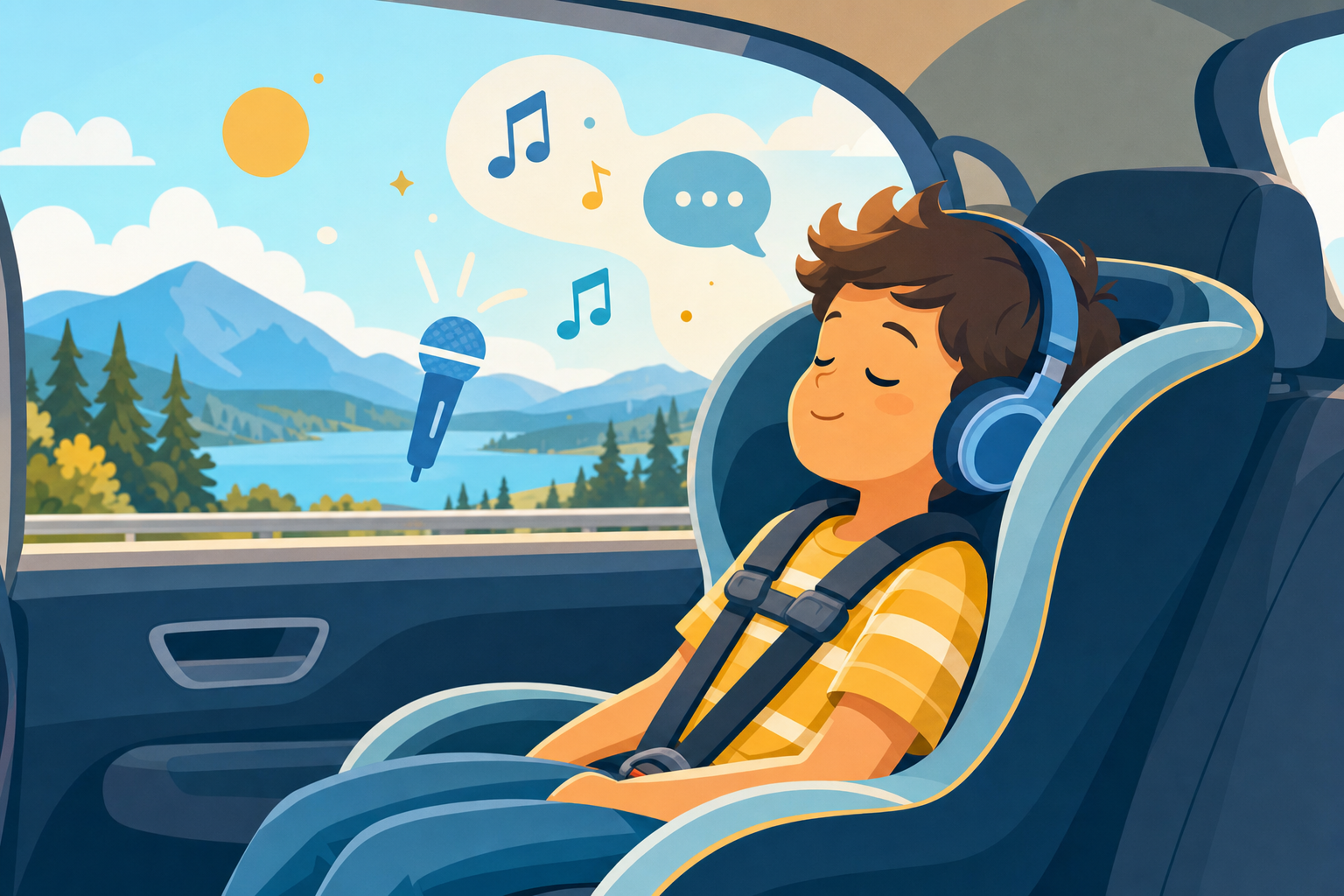
Your kid just threw up in the backseat for the second time this month, and you're only 20 minutes into a 4-hour drive. You tried the "look out the window" trick every website suggests, but it made things worse. The swaying landscape, the passing trees, the moving cars outside actually trigger the nausea. You need screen-free car activities for kids who get carsick from looking out the window, and most advice ignores that this is even possible.
It is possible. Some kids get motion sickness specifically from watching the world move past them. The visual disconnect between what their eyes see (motion) and what their body feels (sitting still) creates the nausea. For these kids, closing their eyes or focusing on something static inside the car is the only solution. Here's what actually works.
Why Looking Out the Window Makes Some Kids Sicker
Motion sickness happens when your brain gets conflicting signals. Your inner ear senses the car's movement, but if your eyes are focused on something that appears to be moving (the landscape whizzing by), your brain gets confused. For some kids, that visual motion is the primary trigger.
Reading makes it worse because their eyes are focused down on a page while their body bounces around. But looking out the window can be just as bad. The solution isn't more visual stimulation. It's less.
You need non-visual road trip games for motion sickness toddlers. Games that keep their eyes closed, their focus inward, or their attention on something that isn't moving.
Auditory Games: No Eyes Required
These are car games that don't require looking outside for kids with motion sickness. They work because your child can close their eyes or stare at a fixed point inside the car.
20 Questions (Animal or Object Edition). One person thinks of an animal or object. Everyone else gets 20 yes-or-no questions to guess it. No visual cues needed. Kids can close their eyes and just listen. This works for ages 4 and up.
Rhyme Time. You say a word ("cat"), and your child has to come up with as many rhyming words as possible ("bat, hat, sat, mat"). No looking required. You can turn it into a back-and-forth game where you trade off being the word-giver.
Story Chain. Start a story with one sentence ("There was a purple dinosaur who loved pizza"). Your child adds the next sentence. You add another. Keep going until the story gets silly or reaches a natural end. Eyes closed, just talking.
Alphabet Categories. Pick a category (animals, foods, names). Go through the alphabet, taking turns naming something in that category for each letter. "A is for apple, B is for banana." If someone gets stuck, skip that letter and move on.
The Humming Game. One person hums a song. Everyone else guesses the song. If you have multiple kids in the car, they can take turns being the hummer. Works best with familiar songs ("Happy Birthday," "Twinkle Twinkle," theme songs from their favorite shows).
For more question-based games that keep kids engaged without needing to look outside, check out road trip questions for kids that work even when motion sickness is a factor.
Tactile Activities: Hands-On, Eyes-Free
What to do when your kid gets carsick from looking at the road? Give them something to do with their hands that doesn't require looking down or out.
Fidget Toys in a Grab Bag. Fill a small fabric bag with textured items: a smooth stone, a piece of velvet, a rubber ball, a small stuffed animal, a textured sensory toy. Your child reaches in, feels an object without looking, and describes it or guesses what it is. You can swap out items between trips to keep it fresh.
Playdough in a Plastic Container. Bring a ball of playdough in a sealed container. Your child can roll it, squish it, make shapes with their eyes closed or while staring straight ahead at the back of the front seat. No mess if you keep it contained. No visual focus required.
Pipe Cleaners. Give your child a handful of pipe cleaners. They can bend them into shapes, letters, or animals without needing to look down much. The tactile feedback keeps them occupied, and the activity is low-mess. A small plastic container can hold finished creations.
Counting Stones or Beads. Bring a small bag of large counting stones or wooden beads (nothing small enough to choke on). Your child can sort them by touch, count them into piles, or just run their fingers over them. The repetitive motion is calming and requires zero visual focus.
Auditory Entertainment: Passive Listening That Works
Sometimes your child is too nauseous for active games. That's when you need screen-free activities for kids who get carsick reading and looking out the window but can still listen.
Audiobooks or Podcasts. Pick age-appropriate audiobooks or story podcasts. Your child can close their eyes and listen. For younger kids (3 to 6), try "Circle Round" or "Stories Podcast." For older kids (7 to 10), "The Unexplainable Disappearance of Mars Patel" or "Harry Potter" audiobooks work well.
Music Singalongs. Create a playlist of songs your child knows by heart. Singing along keeps them engaged without requiring any visual focus. Bonus: it distracts from the nausea.
Family Audio Games. Record your own "choose your own adventure" stories before the trip. Play them back in the car, pausing at decision points so your child can shout out what happens next. It's interactive but requires no looking.
Static-Focus Activities: Eyes Open, No Motion
These are road trip games for kids who can't look out the window due to motion sickness but can handle looking at something that isn't moving inside the car.
Sticker Scenes on a Clipboard. Bring a clipboard, blank paper, and reusable stickers (the puffy kind that peel off easily). Your child creates scenes on the paper while the clipboard stays flat on their lap. The paper doesn't move. Their eyes stay focused on something static. You can also grab printable coloring pages from Chunky Crayon if your child can handle minimal coloring without getting queasy, but for most carsick kids, stickers are safer.
Magnet Board Play. A small magnetic board with alphabet magnets or magnetic shapes works because the board stays in one place. Your child can spell words, make patterns, or just move magnets around. No swaying landscape to watch.
Lacing Cards. Bring thick lacing cards (the kind with big holes and a shoelace). Your child can lace the cards while looking at their lap, where everything is stationary. It's repetitive and calming.
What Actually Helps When Nausea Hits
Even with the best activities, motion sickness can still strike. Here's what to do in the moment.
Pull Over. If your child says they feel sick, stop the car as soon as it's safe. Fresh air and solid ground help reset their system.
Cold Air on the Face. Crack a window or aim the air vent at your child's face. The cool air helps.
Crackers and Water. Plain crackers (saltines or graham crackers) can settle the stomach. Small sips of water help too. Avoid milk, juice, or anything sugary.
Ginger. Ginger chews, ginger gum, or ginger tea (in a spill-proof bottle) can reduce nausea. Check with your pediatrician first, especially for younger kids.
Distraction. Keep talking to your child about something they love (their favorite animal, what they want for their birthday). The mental distraction can reduce the focus on feeling sick.
If your child is prone to carsickness, you might also find quiet car activities for tired kids helpful for those stretches when they're too worn out to play actively but not quite ready to sleep.
How to Prep for a Carsick-Prone Kid
Before your next trip, set yourself up for success.
Pack a Nausea Kit. Include a plastic bag (for emergencies), wet wipes, a change of clothes, paper towels, and a small bottle of air freshener. Keep it in an easy-to-reach spot.
Front Seat Rule (If Age-Appropriate). Older kids (usually 13 and up, depending on your state's laws and your car's airbag setup) often do better in the front seat, where they can see the road ahead. Check your local laws first.
Plan Stops. Build in breaks every 60 to 90 minutes. Let your child get out, walk around, and reset.
Test Activities at Home. Not every kid responds the same way to every activity. Test your auditory games and tactile toys at home before the trip so you know what works.
Avoid Heavy Meals. Don't feed your child a big meal right before leaving. Light snacks are better.
The Bottom Line
You don't need your child to stare out the window or read a book to survive a long car ride. You need activities that work with their motion sickness, not against it. Auditory games, tactile toys, and static-focus activities keep them occupied without triggering nausea. Pack your nausea kit, test a few games before you leave, and plan for stops. You'll get there. And with any luck, the backseat will stay clean.