May 27, 2026
Screen-Free Flight Activities Kids Love (Fits in Carry-On!)
Discover quiet, mess-free airplane activities for kids ages 2 to 10 that fit in your carry-on. Perfect for long flights and layovers without screens.
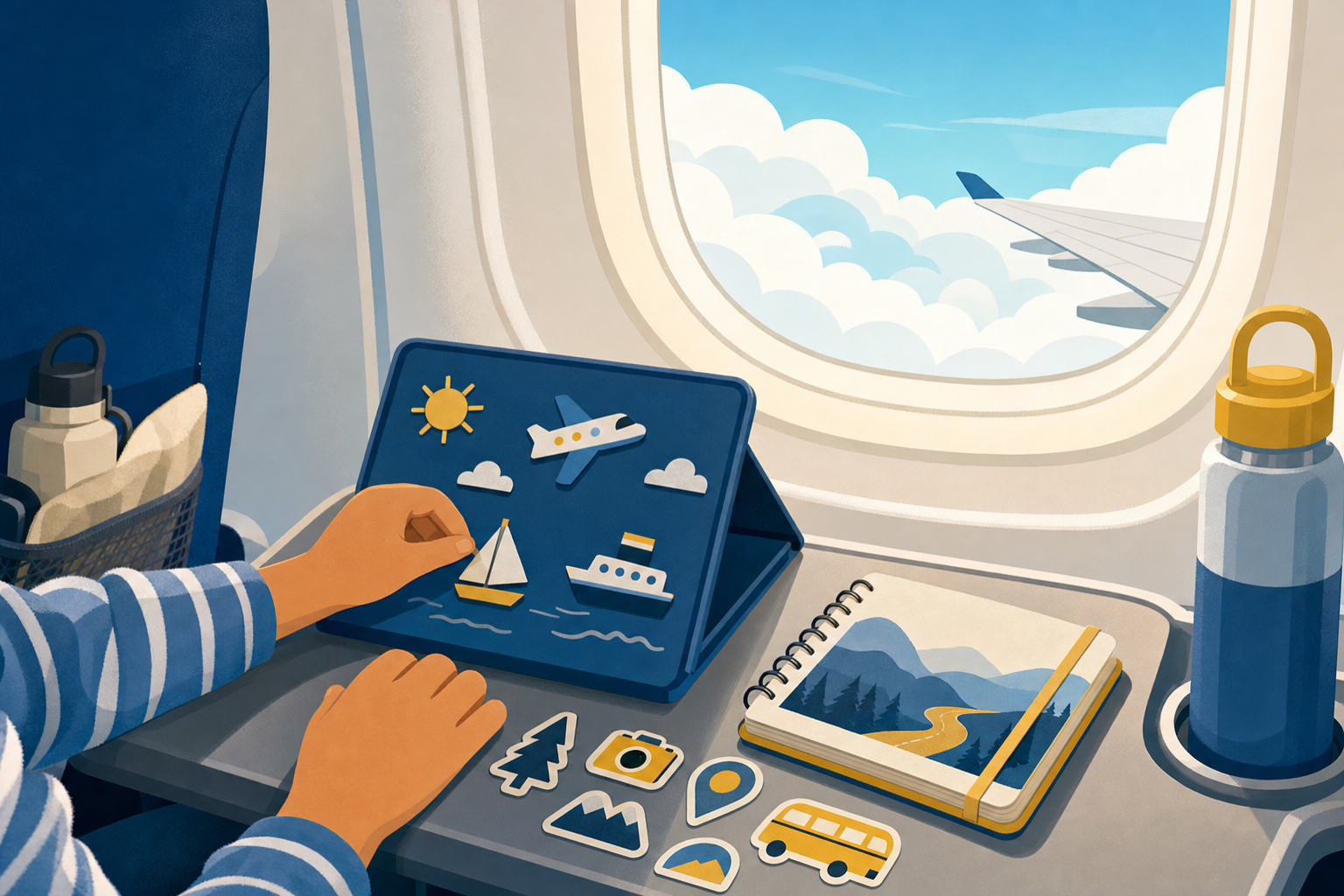
How to Entertain Kids During a Cross-Country Flight with Long Layovers When You Want Screen-Free, Low-Mess Activities That Actually Fit in a Carry-On
You're staring at a flight itinerary with a two-hour layover in Denver and another three hours before you land in Boston. Your 3-year-old will lose it during boarding, your 7-year-old gets antsy after twenty minutes, and your carry-on is already stuffed with snacks and wipes. The idea of managing both a long flight and a long layover without handing over a tablet sounds impossible, but it's not.
The secret is splitting your strategy between what works at 30,000 feet (quiet, contained, no rolling objects) and what works in an airport terminal (bigger movements, louder games, stuff you can spread out). Most flight activity lists treat the plane and the layover as the same problem. They're not. Here's how to pack and plan for both without losing your mind or your bag space.
Pack Two Separate Activity Zones in One Bag
Don't just throw activities into your carry-on and hope for the best. Divide your bag into two clear sections: plane activities and layover activities. Use gallon zip-lock bags or packing cubes to keep them separated.
Plane zone (quiet, no-roll, mess-proof):
- Reusable sticker books (nothing with tiny pieces that fall)
- Window clings (they stick to tray tables and windows, zero cleanup)
- Pipe cleaners for bending and shaping
- Post-it notes for drawing, folding, or making tiny paper airplanes
- A small magnetic drawing board
- Travel-size play dough in a sealed container
Layover zone (bigger, louder, movement-friendly):
- A hacky sack or soft foam ball for hallway tossing
- A deck of cards for games like Go Fish or War
- A jump rope (yes, really, find an empty gate area)
- Chalk if you're landing somewhere warm with outdoor sidewalks
- A small notepad and pencil for scavenger hunts you make up on the spot
This split keeps you from pulling out the jump rope mid-flight or trying to contain rolling stickers during taxi. It also gives kids something new to look forward to when you finally land and hit the terminal.
Use the Layover for Big-Body Movement Before the Next Flight
Long layovers are not rest time for parents, but they are gold for burning energy before you're trapped in a metal tube again. Do not sit at the gate scrolling your phone while your kids get progressively more wound up. Move.
Find the longest empty hallway in the terminal and play follow-the-leader, walking lunges, or races to a distant window. Some airports have play areas, but they're often crowded and germ factories. A quiet terminal hallway is better.
If you're traveling with multiple ages, try this: the youngest picks a gate number, everyone speed-walks there, then the oldest picks the next one. Keep rotating. It's boring for you, but it works. For more ideas that translate from car to terminal, check out these back seat road trip games for siblings that need zero setup.
Another layover win: scavenger hunts. Write a quick list on a scrap of paper (find a plane with a red tail, spot someone wearing a baseball cap, count five rolling suitcases). Kids 5 and up will run with it. Toddlers can do a simpler version (find something blue, find a window). If you need more low-energy inspiration for keeping younger kids engaged during long waits, these airport layover activities for toddlers are a lifesaver.
Rotate Activities Every 20 to 30 Minutes on the Plane
Kids don't stay interested in one thing for two hours. You know this. So don't try to make pipe cleaners last the whole flight. Plan for rotation.
Bring 4 to 6 small activities and introduce a new one every 20 to 30 minutes. When the first activity loses steam, pack it up completely (out of sight) and pull out the next. This feels like a new experience instead of the same boring bag.
Here's a sample rotation for a three-hour flight:
- Takeoff to cruising altitude: window clings on the tray table
- First 30 minutes: reusable sticker book
- Next 30 minutes: pipe cleaner sculpting challenge (who can make the tallest tower)
- Next 30 minutes: snack break plus a round of I Spy using only things inside the plane
- Final stretch: Post-it note drawing or folding
For toddlers (ages 2 to 4), cut the rotation to 15 to 20 minutes. They need more frequent changes. For school-age kids (7 to 10), you can stretch to 40 minutes if the activity is engaging enough.
One quiet, mess-light option for all ages: printable coloring pages from Chunky Crayon that fit flat in a gallon bag with a few crayons. They're simple enough for little hands and detailed enough for older kids who want something to focus on.
Bring Snacks That Double as Activities
You're already packing snacks. Make them do double duty as quiet airplane games for kids.
- Cheerios or round crackers: stack them, make patterns, sort by color if you have multiple types
- Pretzel sticks: build tiny log cabins on the tray table
- Grapes or blueberries: count them, line them up, play "guess how many in my hand"
- String cheese: peel it into the thinnest possible strips (this takes forever, which is the point)
These are not just time-killers. They're fine motor skill practice disguised as boredom relief. And when the activity is done, they eat the evidence. Zero cleanup.
Avoid anything sticky, crumbly, or with wrappers that crinkle loud enough to annoy your row. Also skip anything with strong smells. Your seatmates will hate you.
Plan One Screen-Free Game for Every Hour of Flight Time
Even with a packed activity bag, you'll hit dead zones where nothing is working. That's when you need verbal games that require zero supplies.
For ages 2 to 5:
- "I'm thinking of an animal" (you describe it, they guess)
- Quiet singing (yes, you'll feel ridiculous, but it works)
- Counting games (how many times can you spot the color red)
For ages 5 to 10:
- 20 Questions using only things on the plane
- Story chain (you start a story, they add one sentence, you add another)
- Rhyme battles (you say a word, they rhyme it, back and forth until someone's stuck)
- Alphabet game using only airline and airport words
These flight activities for kids ages 2 to 10 don't require you to dig through your bag, they don't make noise, and they keep brains busy when hands are bored.
If you're flying solo with multiple kids, alternate games so everyone gets a turn. The 3-year-old does animal guessing while the 7-year-old waits, then the 7-year-old picks the next game. It's not perfect, but it prevents the oldest from checking out completely.
What to Do When Everything Fails and the Meltdown Starts
You did everything right and your 4-year-old is still losing it at 35,000 feet. It happens. Here's your emergency plan.
First: get up and walk. Even if the seatbelt sign is off and the aisle is tiny, walk to the bathroom, stand in the galley for two minutes, let them stretch. Sometimes the problem is not boredom, it's physical discomfort from sitting too long.
Second: pull out something completely new that you hid in your bag as a secret weapon. A small toy from the dollar store, a new pack of stickers, anything they haven't seen yet. Novelty buys you 10 to 15 minutes.
Third: accept that sometimes the meltdown has to happen. You're not a bad parent. Long flights are hard for everyone. Do what you need to do to survive, even if that means handing over a screen for the final hour. This whole plan is about minimizing screen time, not eliminating it under all circumstances.
If boredom itself is part of the issue (and not overstimulation), remember that boredom is actually good for kids in small doses. Sometimes sitting quietly and staring out the window is not a failure. It's a brain break.
The Real Win: Managing Carry-On Limits Without Overpacking
You cannot bring twelve busy bags and a rolling suitcase full of activities. Airlines have limits, and you still need room for diapers, wipes, and a change of clothes.
Here's the carry-on strategy: one personal item (your purse or backpack) dedicated entirely to kid activities, snacks, and wipes. Keep your clothes and adult stuff in a separate carry-on that goes in the overhead bin.
Inside your personal item:
- Two gallon bags of plane activities
- Two gallon bags of layover activities
- One gallon bag of emergency snacks
- One gallon bag of wipes, tissues, and a change of clothes for the youngest
That's it. Five bags inside one backpack. Everything is visible, nothing gets lost at the bottom, and you can pull out exactly what you need without unpacking the whole thing in 18 inches of legroom.
If you're traveling with a partner, split the load. One person carries kid activities, the other carries snacks and backup supplies. If you're solo, prioritize the activities that work for multiple ages so you're not packing separate bags for each kid.
Final Thought: The Layover Is Your Secret Weapon
Most parents dread layovers, but they're actually the easiest part of the trip to manage if you plan for movement and noise. Let your kids be loud in the terminal. Let them run (within reason). Let them burn off every ounce of energy before you board the next flight.
The plane is where you need quiet, contained, screen-free plane activities for toddlers and older kids alike. The airport is where you let them be kids. Splitting your strategy between the two will save your sanity more than any busy bag for airplane travel ever could.
You don't need a perfect plan. You just need two plans: one for the air, one for the ground. Pack smart, rotate often, and give yourself permission to survive instead of trying to be the hero parent who does it all perfectly. You'll land tired, but you'll land.