July 16, 2026
Screen-Free Road Trip Activities for Tired Kids (Ages 2 to 6)
Prevent car meltdowns with these genius low-energy activities for exhausted toddlers and preschoolers. No supplies needed, works at gas stations and hotels too.
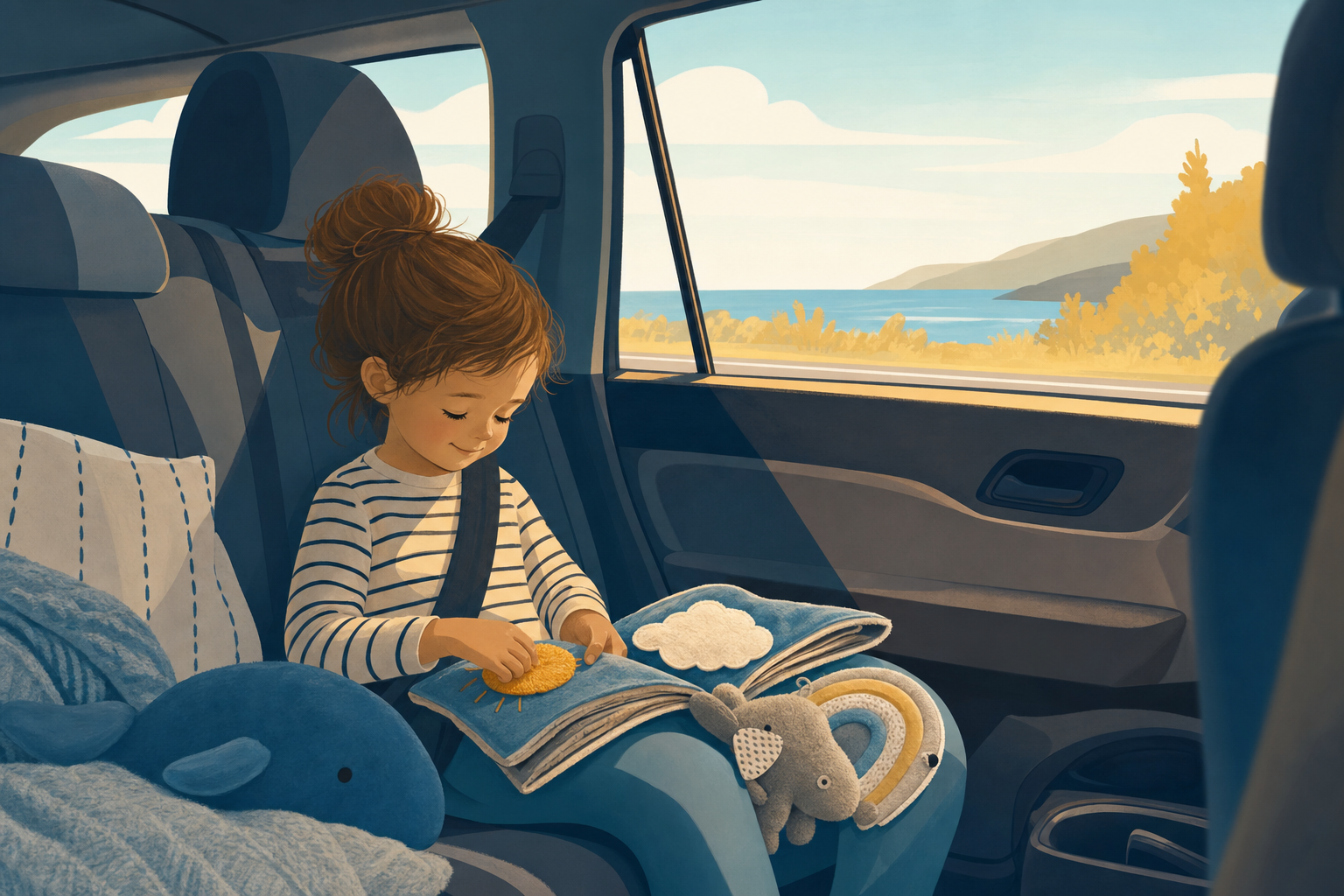
Screen-Free, Low-Energy 'Restless but Tired' Activities for Exhausted Kids on Long Road Trips (Ages 2 to 6)
Your toddler has been in the car for three hours. They're too tired to play I Spy. Too cranky to sing. Too wired to actually nap. They're kicking the seat, whining, and one wrong word away from a full meltdown. You know they need rest, but their body hasn't gotten the memo yet.
This is the exhausted-but-restless zone, and it's brutal on a long car ride. The usual road trip games require focus and energy your kid doesn't have right now. What you need are activities that let them zone out while staying just occupied enough to avoid a meltdown. These aren't games. They're quiet, low-energy occupiers that work when your child is running on fumes.
Why Tired Kids Can't Do Normal Road Trip Activities
When kids are exhausted, their ability to focus, follow rules, or stay verbally engaged collapses. They're dysregulated. Their brain is overstimulated but their body is depleted.
Classic car games like License Plate Bingo or 20 Questions require active participation. A tired 4-year-old doesn't have the bandwidth for that. They need something passive, sensory, and forgiving.
If your child also gets carsick, tactile road trip games that don't require looking out the window can help. But when they're this tired, even those might be too much.
What Works: Slow, Repetitive, Sensory Activities
The goal isn't entertainment. It's regulated calm. Think quiet, repetitive motions that let their nervous system settle without requiring decision-making.
Velvet Ribbon or Silky Scarf
Hand them a piece of velvet ribbon, a silk scarf, or a soft fabric square. No instructions. Just something to touch, rub between their fingers, or drape over their lap.
This works because it's tactile and self-soothing. They can stroke it, twist it, or let it slide through their hands. It's mindless in the best way.
You can grab a scarf at most gas stations (in the impulse aisle near sunglasses) or hotel gift shops. If you're on an overnight stop, a cheap pillowcase from the hotel works too.
Smooth Stones or Textured Fidgets
A handful of smooth pebbles (from a rest stop parking lot or hotel landscaping) gives their hands something to do. They can sort them, stack them gently in a cupholder, or just hold them.
If you packed small textured fidgets (a squishy ball, a wooden ring, a rubber bouncy ball), now's the time. The key is no noise and no pieces to drop.
Slow, Whispered Counting Game
You count softly. They don't have to respond. Just hearing your calm voice gives them something to anchor to.
Count passing white cars. Count breaths ("One... two... three..."). Count how many seconds they can hold a stuffed animal without moving. The rhythm is soothing, and there's no pressure to participate.
This isn't a game they play. It's a game you narrate while they half-listen and decompress.
Audio That Doesn't Require Attention
Screens are out, but audio can work if it's low-stakes. The difference: they don't have to watch or follow a plot.
White Noise or Nature Sounds
Play rain sounds, ocean waves, or a box fan recording from your phone. It's boring on purpose. The monotony helps their brain slow down.
You're not trying to entertain them. You're giving them permission to zone out.
Familiar Audiobook or Song on Repeat
Pick something they've heard 50 times. A favorite picture book read aloud, or one song looped. Familiarity is calming when they're overstimulated.
New content requires attention. Repeated content is a warm blanket.
One-Handed, No-Mess Quiet Activities
If they have just enough energy to do something (but not much), try activities that require almost no setup and create zero mess.
Magnet Tiles or Felt Shapes
A small pile of magnetic tiles (six to eight pieces) can sit in their lap. They can stack them, stick them together, or just hold them. Felt shapes work the same way: soft, easy to grip, no noise when dropped.
Both are forgiving if they lose interest after two minutes.
Printable Coloring Pages
If they're not carsick and have enough energy to hold a crayon, printable coloring pages from Chunky Crayon are a quiet, mess-light option. Keep expectations low. They might color one square and stop. That's fine.
Bring three crayons max (one dark, two colors). Fewer choices = less overwhelm.
Sticker Peeling
Give them a sheet of stickers and let them peel and stick them onto a blank index card, a paper plate, or the back of a seat (if you're okay with that). The repetitive motion is soothing.
Dot stickers from a dollar store work best. They're cheap, easy to peel, and stick without much pressure.
What to Do at Gas Stations and Overnight Stops
When you pull over, give them one low-energy, sensory-reset activity before getting back in the car.
Walk-and-Carry
At a gas station, let them carry something light (an empty water bottle, a small snack bag) from the car to the trash can and back. The walk + task combo gives them a sense of purpose without requiring conversation.
Texture Hunt
At a hotel, let them touch three different textures (carpet, wall, bedspread). No talking required. Just "Find something soft. Now find something bumpy."
This gives their sensory system input without demanding energy.
Quiet Floor Time
In a hotel room, spread out a towel or blanket and let them lie there with a stuffed animal for five minutes. No instructions. Just existing in a new space.
Sometimes kids need permission to do nothing. If your household usually defaults to structured activities or screens, screen-free activities when kids are bored of all their toys might give you ideas for low-pressure reset moments.
What Doesn't Work When They're This Tired
Skip anything that requires:
- Verbal responses (20 Questions, storytelling games)
- Rule-following (Bingo, scavenger hunts)
- Looking out the window for extended periods (if they're carsick)
- Decision-making ("Do you want to color or play with blocks?")
Tired kids can't handle choices. They need one simple, quiet thing handed to them.
How to Know It's Working
You're not looking for smiles or engagement. You're looking for calm body language. Slower breathing. Less whining. Maybe they zone out completely. That's success.
If they fall asleep holding a ribbon or listening to rain sounds, you've done your job. If they stay awake but stop kicking the seat, that's also a win.
Keep It Simple
When your kid is exhausted on a long road trip, the goal isn't fun. It's preventing a meltdown while their body catches up to their brain. Slow, sensory, no-pressure activities buy you the time they need to either sleep or regulate enough to make it to the next stop.
Pack one or two of these in your car (a scarf, some stones, a few crayons). When the restless-but-tired moment hits, you'll have something that works without making things worse.