July 14, 2026
Road Trip Games for Kids Who Get Carsick (No Looking!)
Discover auditory, memory, and touch-based car games perfect for kids who get carsick. Keep them entertained without looking out the window. Try these today!
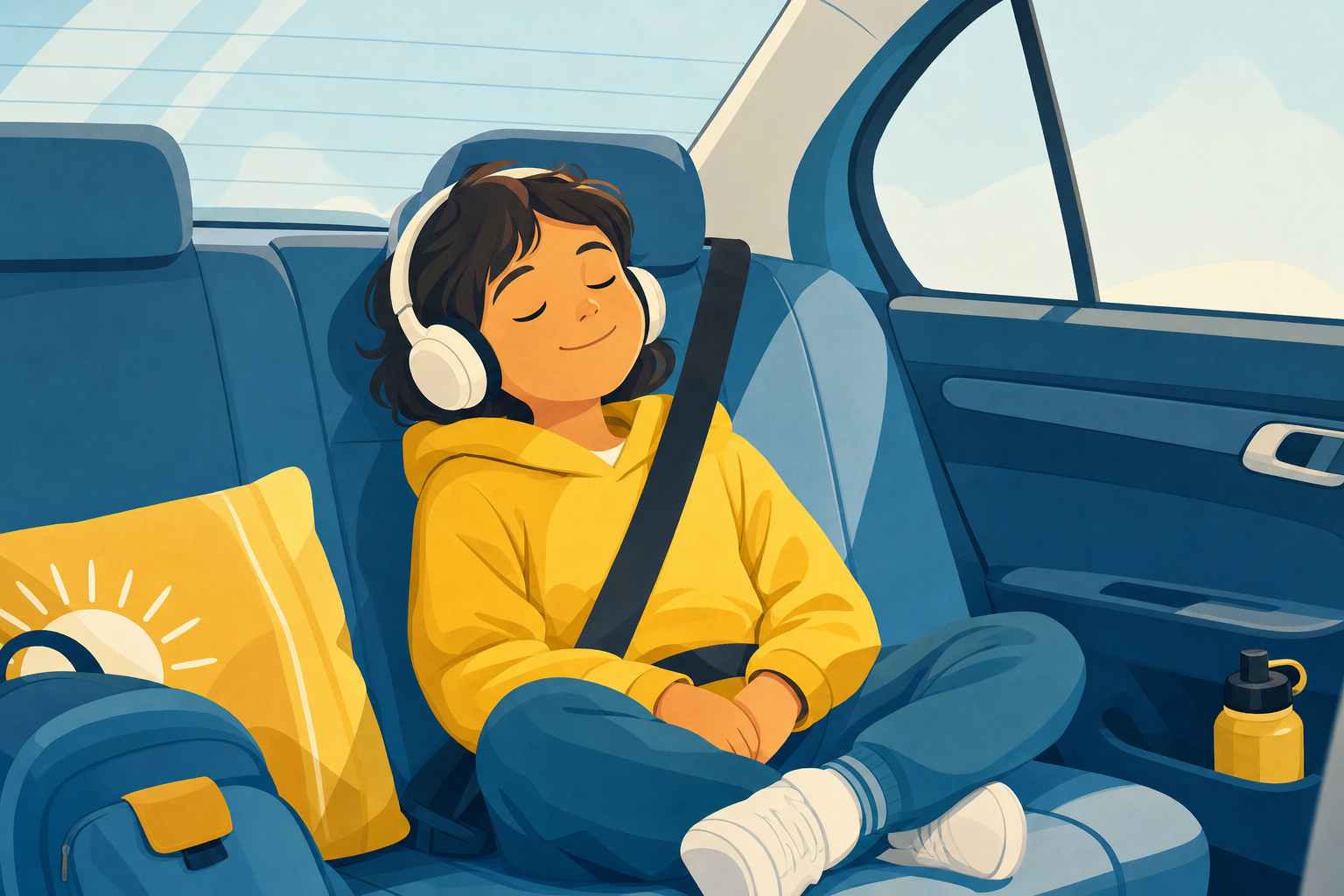
Auditory and Memory-Based Road Trip Games for Kids Who Get Carsick (No Looking Out the Window)
Your kid gets carsick the second they try to spot a red car or read a road sign. The usual road trip games are off the table, and you've still got two hours until the next rest stop.
Most car games assume kids can look out the window or down at a book. For a child prone to motion sickness, that's a recipe for disaster. The good news: there's a whole category of auditory and memory-based games that require zero visual input. No reading, no window-watching, just listening, thinking, and talking.
Here's how to keep a carsick kid entertained without making them look at anything.
Why Auditory Games Work for Kids Who Get Carsick
Motion sickness happens when your inner ear detects movement but your eyes see a stationary environment (like the inside of a car or a book in your lap). The mismatch confuses your brain and triggers nausea.
Auditory games sidestep this entirely. When your child closes their eyes or stares straight ahead at the seat back, their brain gets consistent sensory input. They can focus on listening, remembering, and responding without the visual conflict that causes queasiness.
These games also work for kids who just finished a bout of carsickness and need a distraction while they recover. No cleanup, no supplies, just voices and brains.
Memory Games That Require Zero Visuals
20 Questions (Audio Only)
One person thinks of an animal, object, or person. Everyone else gets 20 yes-or-no questions to guess it. The key for carsick kids: no writing down answers or looking at reference materials. It's all verbal.
For younger kids (ages 3 to 5), narrow the category. "I'm thinking of a farm animal" is easier than "I'm thinking of anything in the world." Older kids (ages 7 to 10) can handle abstract categories like "a character from a movie" or "something you'd find in a kitchen."
I'm Going on a Picnic (Memory Chain)
The first person says, "I'm going on a picnic and I'm bringing apples." The next person repeats the list and adds one item: "I'm going on a picnic and I'm bringing apples and bananas." Keep going until someone forgets the sequence.
For a carsick kid, this game is perfect because they can close their eyes and visualize the growing list in their head. No looking required. If your child struggles with long lists, cap it at 10 items and start a new round.
Category Memory Race
Pick a category (types of fruit, dog breeds, US states, pizza toppings). Set a timer for 30 seconds. Each person takes turns naming something in that category without repeating. If you repeat or can't think of one, you're out.
This works well for restless kids who need quick, competitive bursts. It's also easy to adjust difficulty. Younger kids get broad categories like "colors" or "animals." Older kids get tougher ones like "things that are sticky" or "words that rhyme with 'car.'"
Storytelling and Word Games (No Reading Involved)
Story Chain (Everyone Adds One Sentence)
Start a story with one sentence: "There was a dragon who lived in a treehouse." The next person adds a sentence. Keep building the story, one sentence at a time, until it gets absurd or reaches a natural ending.
This is a solid no-look car game for kids who get carsick because it keeps their brain busy without requiring them to focus their eyes. Younger kids will lean into silly tangents (the dragon eats a million pancakes). Older kids might try to steer it toward a plot twist.
If your kid is prone to getting stuck, give them a prompt: "What does the dragon do next?" or "What does the treehouse look like inside?"
Rhyme Time
One person says a word ("cat"). Everyone takes turns saying a word that rhymes ("bat," "hat," "mat"). No repeats. When someone can't think of a rhyme, pick a new word.
For kids who just learned to rhyme (ages 3 to 5), stick with simple words like "dog," "car," or "fun." For older kids, try harder words like "orange" (good luck) or let them pick nonsense words that rhyme ("blat" counts if it sounds right).
Would You Rather (Road Trip Edition)
Ask a "Would you rather" question and let everyone explain their choice. Examples: "Would you rather have a pet dinosaur or a pet robot?" or "Would you rather eat only pizza for a year or never eat pizza again?"
The explaining part is key. It burns time and keeps kids talking instead of thinking about their stomach. This game also works well when paired with screen-free car activities for kids who get carsick if you're looking for more variety.
Listening and Sound-Based Games
Name That Tune (Humming Version)
One person hums a song (no lyrics). Everyone else guesses the song title. If no one gets it after 30 seconds, the hummer can add one clue ("It's from Frozen" or "We sang it at Grandma's house").
This is one of the best auditory road trip games for kids who get carsick because it requires zero visual focus. Younger kids will hum "Twinkle Twinkle" or "Baby Shark." Older kids might hum theme songs from shows or pop songs they've heard on the radio.
If your family is not musically inclined, switch to humming TV show themes or jingles from commercials. Much easier.
Sound Effects Guess
One person makes a sound effect (a creaky door, a car engine, a dog barking, a toilet flushing). Everyone else guesses what it is. Kids love this because they get to be loud and weird in the car.
For a quieter version, whisper the sound effect or do it with your mouth closed. For a harder version, string three sound effects together and make everyone guess the story (creaky door + footsteps + scream = a spooky house).
Alphabet Sounds
Go through the alphabet, and for each letter, everyone names a sound that starts with that letter. A = ambulance siren, B = buzzing bee, C = car horn. If someone can't think of one, move to the next letter.
This game works well for younger kids who are learning letters. Older kids can add sound effects or imitate the sound out loud for bonus points.
Touch and Memory Combo (Eyes Closed, Hands Busy)
Guess the Object (Tactile Memory)
Put a small object in your child's hand while their eyes are closed. They feel it and guess what it is. Use items from your purse, the glove box, or a snack bag: a granola bar, a keychain, a pen, a hair tie.
This bridges auditory and tactile play without requiring them to look down. It's especially useful for kids who need a sensory break from talking games. For more tactile options, check out tactile road trip games for kids with car sickness.
Category Countdown (Eyes Closed)
Pick a category ("types of candy" or "things in a bedroom"). Your child closes their eyes and counts backward from 10. On each number, they name something in that category. If they get stuck, they can skip a number.
This works as a calming game when your kid is on the edge of carsickness. The counting rhythm plus the mental challenge distracts them from nausea without adding visual stimulation.
One Quiet Reward for After the Car Ride
Once you've survived the drive, your carsick kid might need a low-key activity that doesn't involve staring at a screen or a book. Printable coloring pages from Chunky Crayon are a quiet, mess-light reward once you're parked and their stomach has settled. No motion, no pressure, just crayons and paper.
What to Avoid (Even If It Sounds Screen-Free)
Skip anything that requires looking out the window. The License Plate Game, I Spy, and road trip bingo are classic car activities, but they're a fast track to vomit for a carsick kid. Same goes for a road trip scavenger hunt for kids who get carsick if it involves spotting things outside.
Also avoid:
- Reading aloud from a book (looking down at pages triggers nausea)
- Drawing or coloring in the car (same problem)
- Handheld electronic games (screen + motion = disaster)
If your kid asks for one of these, redirect to an auditory version. Instead of I Spy, play 20 Questions. Instead of drawing, play Story Chain.
How to Keep These Games From Getting Boring
Rotate games every 15 to 20 minutes. Even the best auditory road trip games for kids who get carsick lose their shine after the third round.
Let your child pick the next game. Giving them control reduces whining and keeps them engaged. If they're too young to decide, offer two choices: "Do you want to play Rhyme Time or Would You Rather?"
For longer trips, mix in non-game distractions: audiobooks, podcasts for kids, or a singalong playlist. Silence is also okay. If your child falls asleep, that's a win.
Pack a Small Backup Kit (Just in Case)
Even with the best no-look car games for kids who get carsick, nausea can still hit. Keep a small bag within reach:
- Gallon-size ziplock bags (for emergencies)
- Baby wipes (for cleanup)
- A change of shirt (for your child, and maybe for you)
- Ginger candies or crackers (if your pediatrician okays them)
- A water bottle (sips help settle the stomach)
Place the bag where your child can reach it without digging around. If they feel queasy, they can grab a bag and a wipe without asking you to pull over immediately.
When to Take a Break
If your child goes quiet mid-game or stops responding, pull over. Nausea is sneaky. They might not say "I feel sick" until it's too late.
Watch for signs: pale face, yawning, cold sweat, or asking to stop talking. When in doubt, take a rest stop break. Five minutes of fresh air beats cleaning vomit out of the seat cracks.
Once they're feeling better, ease back into a low-key auditory game like Would You Rather or a quiet singalong. Skip the competitive memory games until their stomach is fully settled.
Why These Games Work Better Than Screens
Screens seem like the obvious solution for a carsick kid, but they often make nausea worse. Looking at a moving image on a stationary screen creates the same inner ear conflict that causes motion sickness in the first place.
Auditory games keep your child's brain engaged without the visual strain. They can close their eyes, rest their head, and still participate. No one has to feel guilty about screen time limits, and you don't have to worry about a tablet flying across the car mid-vomit.
For families with multiple kids, these games also level the playing field. A 4-year-old and an 8-year-old can both play 20 Questions or Story Chain without one feeling left out or bored.
Final Thought: One Game Is Enough
You don't need to memorize 47 road trip games before you leave the driveway. Pick two or three auditory games from this list, try them on your next drive, and see what sticks. The goal is survival, not entertainment perfection.
If your kid plays Story Chain for 20 minutes and then naps for an hour, you've won. If they'd rather sit in silence and listen to the hum of the engine, that's okay too. The best car game is the one that gets you to your destination without anyone throwing up.