October 27, 2026
Toddler Refuses Car Seat? Try This 5-Min Routine
Stop the car seat battle before your road trip starts. Grab our free printable departure routine and get your toddler buckled in without tears.
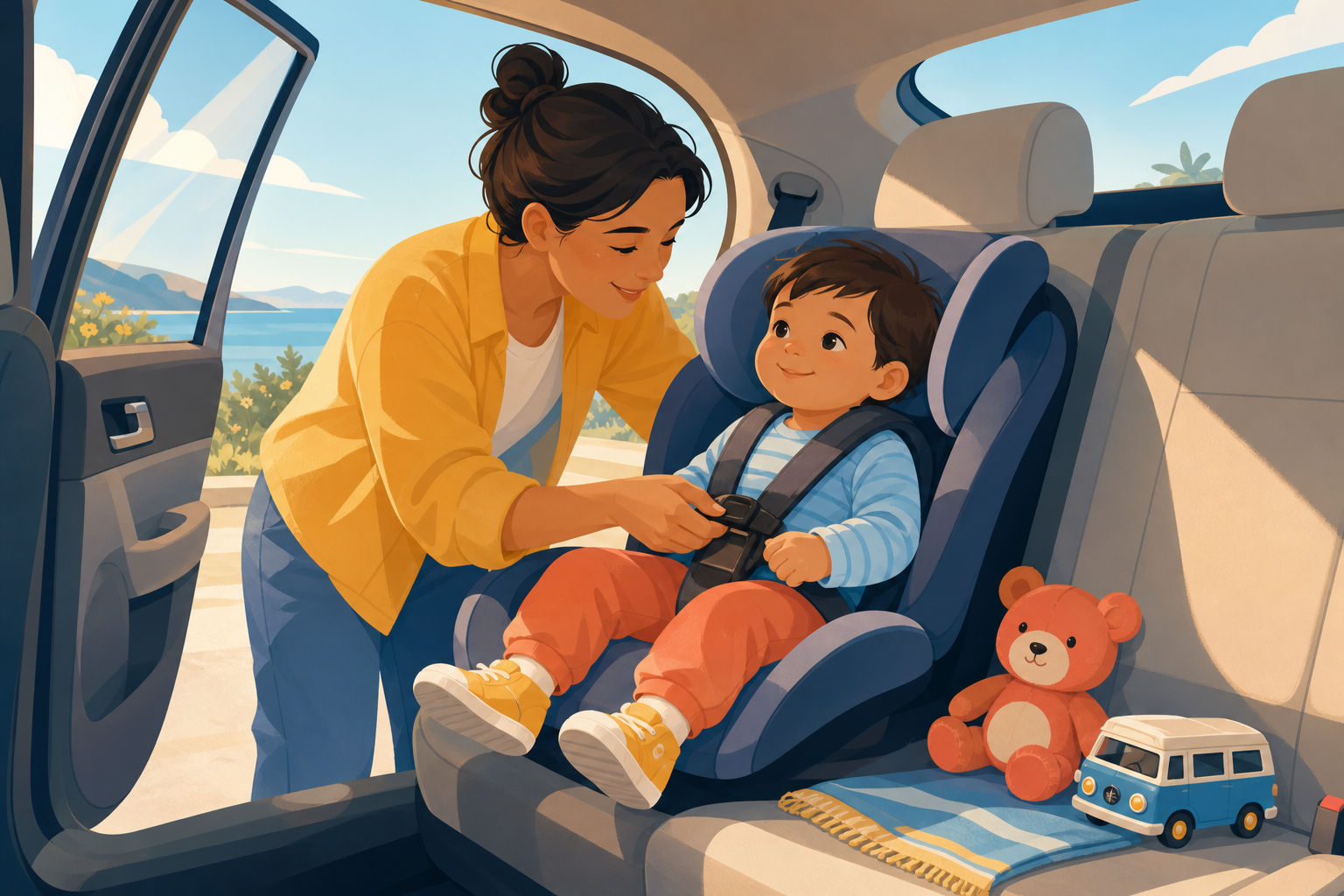
How to Get a Toddler Into the Car Seat Without a Meltdown Before a Road Trip
Your bags are packed, the snacks are in a cooler, and you are already running 15 minutes behind. Then your toddler plants both feet on the driveway, arches their back like a cat, and screams "NO CAR!" at a volume that makes the neighbors check their window blinds. If this is a familiar scene, you are not doing anything wrong. Toddlers hate sudden transitions, and getting strapped into a seat they cannot escape from is one of the biggest transitions of their day.
The fix is not a better bribe or a stricter voice. It is a short, repeatable departure routine that your child can predict, which removes the fight before it starts.
Why Toddler Car Seat Resistance Happens Right Before a Road Trip
A normal errand feels different from a road trip, and toddlers pick up on that difference fast. The car is packed differently, the energy in the house is rushed, and everyone keeps saying "hurry up." That combination tells a toddler's brain something big and unpredictable is happening, and their go-to response is to resist the one part they can control: getting into the seat.
Car seat battles before driving usually come down to three things:
- Loss of control. The seat is buckled, tight, and non-negotiable. Toddlers push back on anything that feels forced.
- No warning. One minute they are playing, the next they are being lifted into a seat. Abrupt transitions trigger meltdowns at this age almost every time.
- Boredom anticipation. Older toddlers have learned that the car seat means sitting still for a long time, and they are already dreading it before the car even starts moving.
Once you see it this way, the goal shifts from "get them in the seat" to "give them a predictable path to the seat." That is what a departure routine does.
The 5-Minute Pre-Drive Routine That Prevents the Fight
This is a car seat transition routine for toddlers that you run every single time before a drive, not just road trips. Repetition is what makes it work. Keep it short, keep the order the same, and let your toddler do as many steps themselves as possible.
- Give a two-minute warning. Say it the same way every time: "Two more minutes, then we get in the car." A visual timer or a phone timer with a sound helps toddlers who do not understand time yet.
- Let them choose one small thing. Which stuffed animal rides along, which shoe goes on first, or which door they walk to. One choice is enough. Too many choices overwhelms a toddler.
- Walk to the car together, narrating what comes next. "We are walking to the car. Next we climb up into your seat." Narration lowers anxiety because nothing feels sudden.
- Let them climb in themselves if they are able. Even a 2-year-old can learn to climb into a car seat with a boost. Doing it themselves turns a forced action into an accomplishment.
- Buckle with a short, consistent phrase. Something like "click, click, ready to roll" said the same way every time. Toddlers find comfort in scripts, even silly ones.
That is the whole routine, start to finish, in under five minutes. The predictability is what does the work, not the specific words you use.
Make It Visual So Your Toddler Can Follow Along
Toddlers under 5 do not process verbal instructions the way older kids do, especially when they are already upset. A simple picture sequence taped to the dashboard or shown on your phone, two minutes, walk, climb in, buckle, go, gives them something to look at instead of something to argue about.
If you already use visual routines at home for things like morning dressing or after-school wind-down, this will feel familiar to your child. The same logic that works for a printable weekend routine chart for kids who resist chores applies here: toddlers cooperate more when they can see what is coming instead of being told what to do.
You can draw this on an index card in under a minute. It does not need to be polished. Four or five simple boxes with stick figures work just as well as anything printed.
What to Do in the Moment If They Still Refuse
Some days the routine will not fully prevent the meltdown, and that is normal. When your toddler refuses the car seat even after the warning and the walk-through, stay calm and keep your language short.
- Get low and validate first. "You don't want to get in. That's hard." One sentence, then move on. Long explanations fuel the standoff.
- Offer the next small choice, not a bigger argument. "Do you want to climb in, or should I help you climb in?" Both options end with them in the seat.
- Avoid negotiating the seat itself. The seat is not optional, so do not debate it. Debate the small stuff around it instead.
- Keep your own urgency out of your voice. Toddlers mirror tension. If you sound frantic because you are late, they escalate.
- Have a boring, safe default. If nothing is working, buckle them while they cry, say your short phrase, and start driving. Movement itself often calms toddlers faster than standing still arguing in the driveway.
If refusal is a daily pattern and not just a road trip issue, the same approach used for stubborn morning routines works here too. See how a sticker chart handles whining and resistance without shaming the child, because the same gentle, consistent structure applies to car seat fights.
Keep the First Few Minutes of the Drive Screen-Free
Once the seat battle is won, do not immediately hand over a tablet. Screen-free car seat activities for toddlers in the first stretch of a drive actually help prevent the next meltdown, because they give your toddler something to do with their hands while they settle into the ride.
A few low-prep options that work well for ages 2 to 4:
- A small basket of textured toys clipped within reach
- Window clings they can stick and unstick repeatedly
- A simple "I spy" game using colors instead of letters
- Soft books with flaps or textures
Printable coloring pages from Chunky Crayon are a quiet, mess-light option once your toddler is settled and ready for something calmer, and they double nicely as a reward for a smooth departure. For toddlers who are not yet reading, you can find more ideas in this guide to screen-free road trip activities for non-reading toddlers.
Make the Routine Stick for the Whole Trip
A road trip departure routine works best when you use it for every leg of the trip, not just the first drive of the morning. Gas station stops, hotel checkouts, and rest area breaks all reset your toddler's resistance clock, so run the same five steps each time you load back up.
Consistency beats cleverness here. The same phrase, the same order, the same small choice offered every time tells your toddler's brain this is safe and familiar, even on day three of a long drive. Within a few repeats, most toddlers start climbing in on their own because they know exactly what happens next.
If the car seat fight has been part of a bigger pattern of transition overwhelm, pairing this with a printable visual schedule for unexpected routine changes can help smooth out the rest of the trip too, from hotel wake-ups to new environments along the way.
The goal is not a perfect, tear-free departure every single time. It is a routine simple enough to run on autopilot, even when you are exhausted and already running late, so the car seat stops being the daily battleground.