June 2, 2026
Screen-Free Camping Road Trip Activities for Kids Ages 2-6
Discover low-mess, screen-free activities perfect for toddlers and preschoolers on camping road trips. Keep kids entertained in the car and at the campsite.
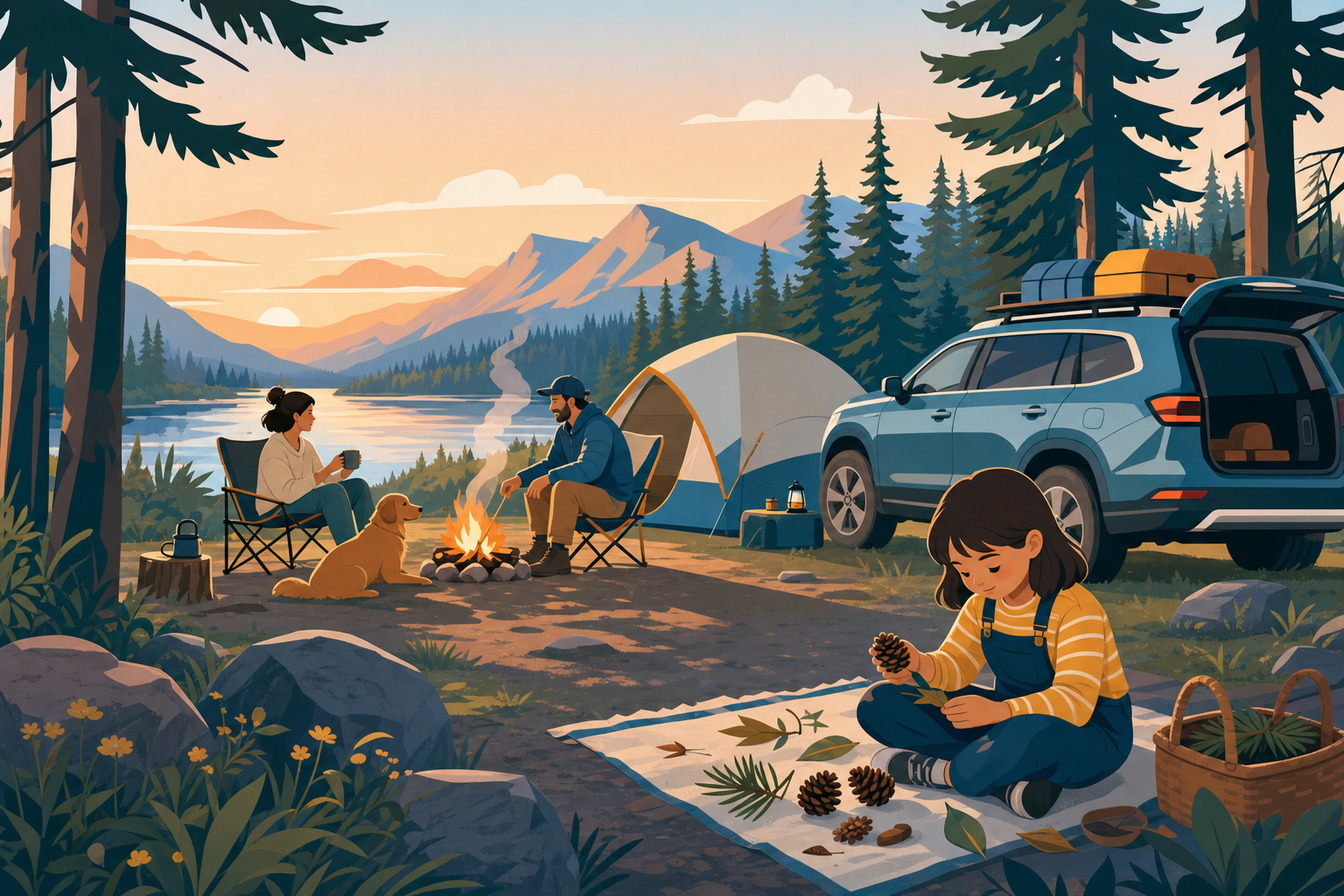
How to Keep a 2- to 6-Year-Old Busy on a Camping Road Trip When You Need Screen-Free, Low-Mess Activities That Work in the Car and at the Campsite
You're three hours into the drive, your toddler has already dropped their snack cup twice, and you still have to unpack tents before dark. Camping road trip activities for kids need to do double duty: survive the car ride and transition seamlessly to the campsite without requiring a separate bin of supplies.
Most screen-free car activities for toddlers work fine for a highway stretch but fall apart the moment you arrive. You don't want to pack one set of toys for the car and another for the campground. You need activities that travel light, keep hands busy, and don't require you to fish lost pieces out from under the seat at 6 a.m.
Here's what actually works for camping trips with young kids, from the moment you buckle in to the moment you're setting up camp.
Start with Activities That Work in Both Places
The best low-mess travel activities for preschoolers are the ones that don't need a flat surface, don't have 47 tiny parts, and don't require your constant supervision. Think about what your kid can do in a moving car that they'll also want to do at a picnic table or inside a tent.
Small fabric dolls or animal figurines are perfect. A toddler can line them up on the car seat, nest them in a cup holder, or create a whole campsite scene on a blanket later. No batteries, no assembly, no lost pieces that ruin the whole set.
Magnetic tiles in a shallow tupperware container work beautifully. They stick together in the car (even over bumps), they're quiet, and kids can build the same structures at the campsite. If a piece goes missing, the set still works.
Pipe cleaners are criminally underrated for road trip activities for 2 year olds and up. A 2-year-old can twist them into loose shapes. A 4-year-old can make bracelets or stick them through the holes in a colander (if you packed one for camp). A 6-year-old can build entire animals. They fit in a sandwich bag, they don't roll away, and they're nearly impossible to ruin.
Pack One Container of Loose Parts
Loose parts sound fancy, but it just means random small objects your kid can sort, stack, or organize without instructions. This is the kind of open-ended play that keeps toddlers and preschoolers occupied for surprisingly long stretches, both in the backseat and at the campground.
Fill a small bin with:
- Pom poms (different sizes and colors)
- Wooden blocks or rock-shaped stones
- Plastic lids from yogurt containers
- Short lengths of ribbon
- Large buttons (nothing small enough to choke on)
- Small pinecones (collect them at your first rest stop)
Your kid can sort them by color in the car, stack them on the picnic table, or line them up inside the tent when it's too hot to be outside. If you're traveling solo with young kids and need activities that don't require your hands, a bin of loose parts is one of the easiest solo parent road trip activities because it doesn't need setup or explanation.
Printable coloring pages from Chunky Crayon are another quiet option that transitions well from car to campsite, especially if you pack a small pencil case of chunky crayons that won't snap in half.
Use the Drive to Prep for Campsite Play
Car games for young kids don't have to stay in the car. Turn them into scavenger hunts that continue once you arrive.
Start a color hunt during the drive. Every time someone spots a red car, they get to collect a red pom pom (from that loose parts bin). At the campsite, kids can sort their collection, count them, or trade colors with a sibling. It's the same activity, just stretched across two locations.
Play a version of I Spy that focuses on things you'll see at camp: trees, rocks, birds, clouds. When you arrive, hand your toddler a small bag and let them collect examples of what they spotted earlier. A 3-year-old can gather smooth rocks. A 5-year-old can find three different kinds of leaves. It's a natural extension of the car game and it buys you 20 minutes to unload the cooler.
Verbal games are some of the best camping trip entertainment for kids because they require zero supplies and no cleanup. If your family is already familiar with no-equipment car games like 20 Questions or the Rhyming Game, those same games work around the campfire or inside the tent at bedtime.
Keep a Small Bin for Campsite-Only Supplies
You don't need a ton of gear, but a few specific items make campsite downtime much easier. Pack these separately so they're not cluttering the car:
- A small folding stool or camp chair sized for toddlers (gives them their own space)
- A plastic tablecloth or picnic blanket that can get dirty
- A sand bucket and a small plastic shovel (dirt is free entertainment)
- A nature journal or plain notebook with a few crayons
- A headlamp your kid can turn on and off (supervision required, but wildly entertaining)
The tablecloth is key. Spread it on the ground and it becomes an instant play zone. Your toddler can dump out the loose parts bin, arrange their figurines, or sort rocks without getting everything covered in dirt. When it's time to pack up, you shake it off and roll it up. No vacuuming required.
Plan for the Transition Meltdown
The hardest moment on a camping road trip isn't the drive. It's the 30 minutes after you arrive when you're trying to set up and your kids are over-tired, overstimulated, and completely done sitting still.
Have one specific activity ready to deploy the moment you open the car door. Not a vague "go play," but a concrete task.
Hand your 4-year-old a bucket and ask them to collect 10 pinecones for a craft later. Give your 2-year-old a plastic cup and let them fill it with dirt (yes, really). Set up the tablecloth in the shade and dump out the loose parts bin with zero instructions.
This is not the time for a new activity that requires your help. You need something that buys you 15 uninterrupted minutes to unload the tent. If your child struggles with transitions or new environments, having a clear travel routine helps them know what to expect when you arrive.
Double-Duty Activities That Earn Their Weight
Every item you pack should serve at least two purposes. A bandana can be a napkin in the car, a dolls' blanket at camp, or a blindfold for a guessing game. A set of stacking cups can hold snacks during the drive and become a pouring station with a water bottle at the campsite.
Small drawstring bags (the kind that come with shoes or gifts) are perfect for travel activity ideas for toddlers and preschoolers. Fill each one with a different mini activity: one with pipe cleaners, one with pom poms and a plastic container, one with smooth stones. Kids can grab a bag in the car, then grab a different one at camp. The variety keeps things interesting without requiring a huge bin of supplies.
A deck of oversized playing cards works for simple matching games in the car (find all the red cards, find all the 5s) and for building card houses on a stable picnic table. A 3-year-old can sort them by color. A 6-year-old can play Go Fish or build a tower. Same deck, multiple skill levels.
What to Skip
Don't pack anything with 20+ small pieces unless you're prepared to lose half of them in the dirt. Don't bring crafts that need glue, paint, or any wet supplies. Don't pack toys that only work on a flat, clean surface.
Skip battery-operated toys. You're camping. You don't want to hunt for AA batteries at a rural gas station because the light-up wand died and your kid is inconsolable.
Skip anything that requires you to facilitate every step. You'll be busy with camp chores, food prep, and keeping everyone from falling into the fire pit. The best activities are the ones kids can do independently (or with minimal check-ins).
The Real Win: Boredom at the Campsite Is Fine
Once you've set up camp, your kids will probably spend less time with the activities you packed and more time poking sticks into the dirt, collecting rocks, or watching bugs. That's the goal. Camping is one of the few places where doing nothing productive is completely acceptable.
If your child says "I'm bored" at the campsite, you're actually winning. Boredom in nature often leads to the kind of imaginative play that doesn't happen at home. Let them be bored. Hand them a stick and a pile of leaves and walk away. If you need a reminder that boredom isn't something you need to fix, camping is a great place to practice.
The activities you packed are there for the in-between moments: the car ride, the post-dinner lull, the too-hot afternoon inside the tent, or the rainy morning when no one can go outside. They're not meant to fill every minute. They're the safety net that keeps everyone from unraveling during the tricky parts.
Pack light, pack smart, and plan for activities that work in both locations. Your camping road trip will be a lot easier when you're not hauling two separate sets of entertainment or fishing lost game pieces out of the campfire ring.