July 11, 2026
Tactile Road Trip Games for Kids with Car Sickness
Discover touch-and-feel car activities that keep carsick kids entertained without looking out the window. Perfect sensory games for motion-sensitive travelers.
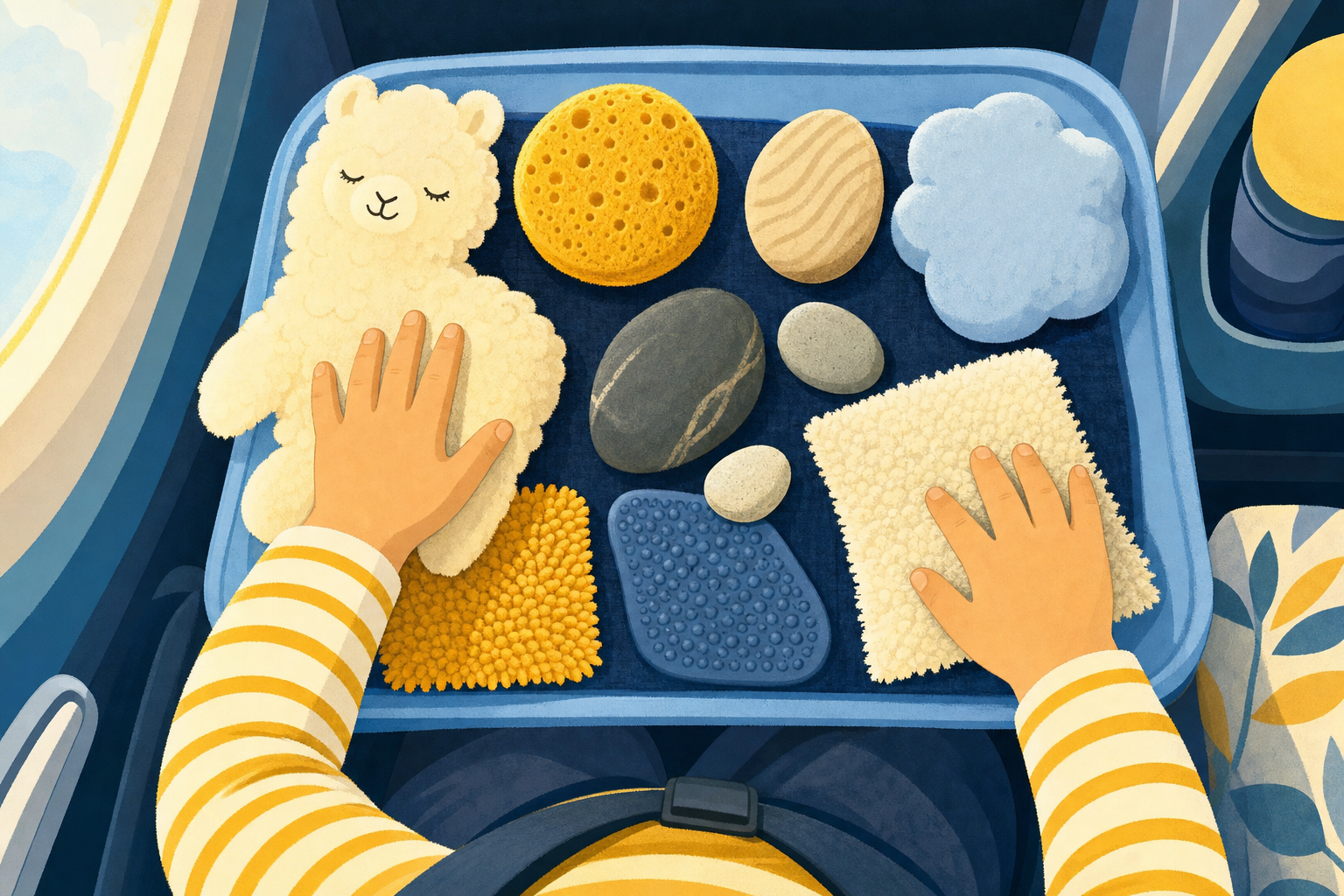
Touch-and-Feel (Tactile) Road Trip Games for Kids Who Get Carsick and Can't Look Out the Window
Your kid gets carsick, won't look out the window, and just threw up in a Ziploc bag for the second time in an hour. Every parent guide says "look at the horizon," but your child either refuses, can't physically do it without gagging, or is too young to understand. You need car sickness activities that don't involve screens, books, or staring at anything that moves.
Here's the reality: motion sickness happens when your inner ear feels movement your eyes don't see. For kids who can't or won't look outside, tactile road trip games (touch-and-feel activities) work because they don't require visual focus. Your child's hands stay busy, their brain stays occupied, and their stomach stays (mostly) settled.
Why Tactile Activities Work for Carsick Kids
Sensory car activities for kids who get carsick work because touch doesn't trigger nausea the way visual tracking does. A 4-year-old squishing Play-Doh or a 6-year-old sorting pipe cleaners isn't reading, watching a screen, or focusing on close-up objects that make motion sickness worse.
These activities also give kids control. When they feel queasy, having something to manipulate with their hands (a squishy ball, a textured fabric square) gives them a physical outlet that reduces anxiety. Anxiety makes nausea worse, so breaking that cycle matters.
One note: some kids do better with their eyes closed during tactile games. If your child wants to close their eyes while feeling objects or textures, let them. It's not avoidance, it's self-regulation.
Touch-and-Feel Car Trip Activities That Don't Require Looking
Mystery Texture Bag
Put 5 to 8 safe household objects in a drawstring bag or pillowcase: a smooth rock, a fuzzy sock, a plastic spoon, a pompom, a Lego brick, a rubber ball. Your child reaches in (without looking) and guesses what they're holding by touch alone.
For carsick toddlers, simplify it: "Can you find the soft thing?" or "Which one is bumpy?" Older kids (ages 6 to 9) can describe textures ("It's cold and hard and has ridges") before guessing.
This works for 15 to 20 minutes per round. Swap objects halfway through the trip to reset interest. Keep a backup bag with different textures so you're not repeating the same guessing game four hours in.
Pipe Cleaner Creations (Eyes-Closed Option)
Hand your child 10 to 15 pipe cleaners in different colors. They can twist, bend, and connect them into shapes, animals, or abstract sculptures without looking down.
For motion-sensitive kids, the key is keeping their head upright and eyes forward (or closed). Pipe cleaners are soft, flexible, and don't require precision, so kids can work by feel. A 5-year-old can make a "curly snake." An 8-year-old can attempt a 3D star or a pair of glasses.
Bonus: pipe cleaners don't roll off laps or wedge under car seats like crayons or small toys.
Squishy Stress Ball Pass (Quiet Car Game)
If you have two kids in the backseat, give them one squishy ball (or a beanbag, a rolled-up sock, or a small stuffed animal). They pass it back and forth without dropping it. No talking, no looking directly at each other, just slow, deliberate hand-offs.
This is a surprisingly effective quiet car activity for tired kids who are also nauseous. The repetitive motion is calming, and the focus on touch (not vision) keeps motion sickness at bay. Set a timer for 10 minutes and see if they can pass it 50 times without a drop.
Fabric Scrap Sorting (Sensory Bin Without the Mess)
Cut 20 to 30 fabric scraps in different textures: fleece, denim, satin, burlap, corduroy, velvet. Put them in a gallon Ziploc bag. Your child sorts them by texture ("all the soft ones in this pile, all the scratchy ones here") without looking.
For younger kids (ages 3 to 5), simplify to two categories: soft and not-soft. For older kids, add a challenge: "Find all the fabrics that feel cold" or "Which ones make a crunchy sound when you squish them?"
This is low-prep and reusable. Store the fabric scraps in a labeled bag for every trip. If you want a mess-free sensory option at home too, check out these no-mess rainy day activities for 2-year-olds, which use similar sorting principles.
Play-Doh in a Lidded Container (No Visual Focus Required)
Give your child a tennis-ball-sized lump of Play-Doh in a shallow Tupperware container (the lid becomes the work surface). They can roll it, poke it, flatten it, and tear it into pieces without looking down.
For carsick kids, the key is keeping their head upright. Prop the container on their lap or wedge it against the car door so they can work by feel. A 4-year-old can make "snakes" by rolling the dough between their palms. A 7-year-old can sculpt by touch alone (eyes closed or staring straight ahead).
Play-Doh also works as a passive fidget. A queasy child can just squish it in one hand while you drive, which gives them a calming sensory outlet without requiring active engagement.
Velcro Shapes or Felt Board (Hands-Only Activity)
Cut simple shapes (circles, squares, triangles) from felt or hook-and-loop Velcro sheets. Your child can stick them to a piece of felt fabric (or the back of a car seat headrest if the fabric cooperates) to make patterns, faces, or abstract designs.
This works because it's entirely tactile. Kids can feel for shapes in a bag, peel them off, and press them onto the felt board without looking down. A 5-year-old can make a "face" (two circles for eyes, a triangle for a nose). An 8-year-old can attempt a pattern (alternating colors or shapes).
Velcro shapes are also quiet, which matters if you have a carsick kid and a napping sibling.
What to Avoid (Even If Other Guides Recommend It)
Skip anything that requires sustained visual focus: books, coloring, I Spy games, or screen-free car activities for kids who get carsick that involve looking at cards or printed games. Those are great for kids with mild queasiness, but they don't work for kids who can't look down or out the window at all.
Also avoid strong-smelling items (scented Play-Doh, markers, stickers). Smell can trigger nausea in motion-sensitive kids, so stick with unscented materials.
Finally, don't force the "look out the window" advice. If your child's motion sickness is severe enough that they vomit when they try, you're not helping by insisting. Tactile activities give them a legitimate alternative that actually works.
How to Prep a Tactile Car Kit in Under 10 Minutes
Grab a gallon Ziploc bag or a small tote. Toss in:
- 10 to 15 pipe cleaners
- A drawstring bag with 6 to 8 textured objects (see Mystery Texture Bag above)
- A lump of Play-Doh in a small container with a lid
- 20 to 30 fabric scraps in a separate Ziploc
- One or two squishy stress balls
That's it. No printables, no laminating, no cutting apart worksheets in the parking lot. Everything is reusable and fits in a bag you can stash in the car door pocket.
If you want a backup activity that's mess-light and doesn't require looking down, printable coloring pages from Chunky Crayon work well for older kids (ages 7+) who can color by feel or with minimal glances. Prop the page on a clipboard, hand them a thick crayon, and let them shade in shapes without sustained focus.
When to Rotate Activities (and When to Just Let Them Sit)
A carsick child doesn't need constant entertainment. Sometimes the best thing you can do is hand them a squishy ball and let them zone out for 30 minutes.
Rotate activities when you notice boredom (they're tossing the pipe cleaners instead of bending them) or escalating nausea (they're getting quieter, paler, or asking for a bag). A fresh tactile activity can redirect their focus before the queasiness turns into vomiting.
But if your child is calm, quiet, and just squishing Play-Doh in silence, don't interrupt. That's not boredom. That's self-soothing, and it's working.
The One Thing That Matters Most
You don't need a perfect activity. You need one thing your child can do with their hands while their stomach settles. A pipe cleaner, a stress ball, a bag of fabric scraps, anything that keeps their brain occupied without making them look down or track movement.
Motion sickness is miserable, and the kids who can't look out the window don't have many options. Tactile road trip games give them something that works, and that's enough.