June 8, 2026
Road Trip Bag Kids Will Actually Use: The Ultimate Guide
Discover how to pack the perfect car activity kit that keeps kids engaged for hours. Smart travel activity bag ideas parents swear by for peaceful drives.
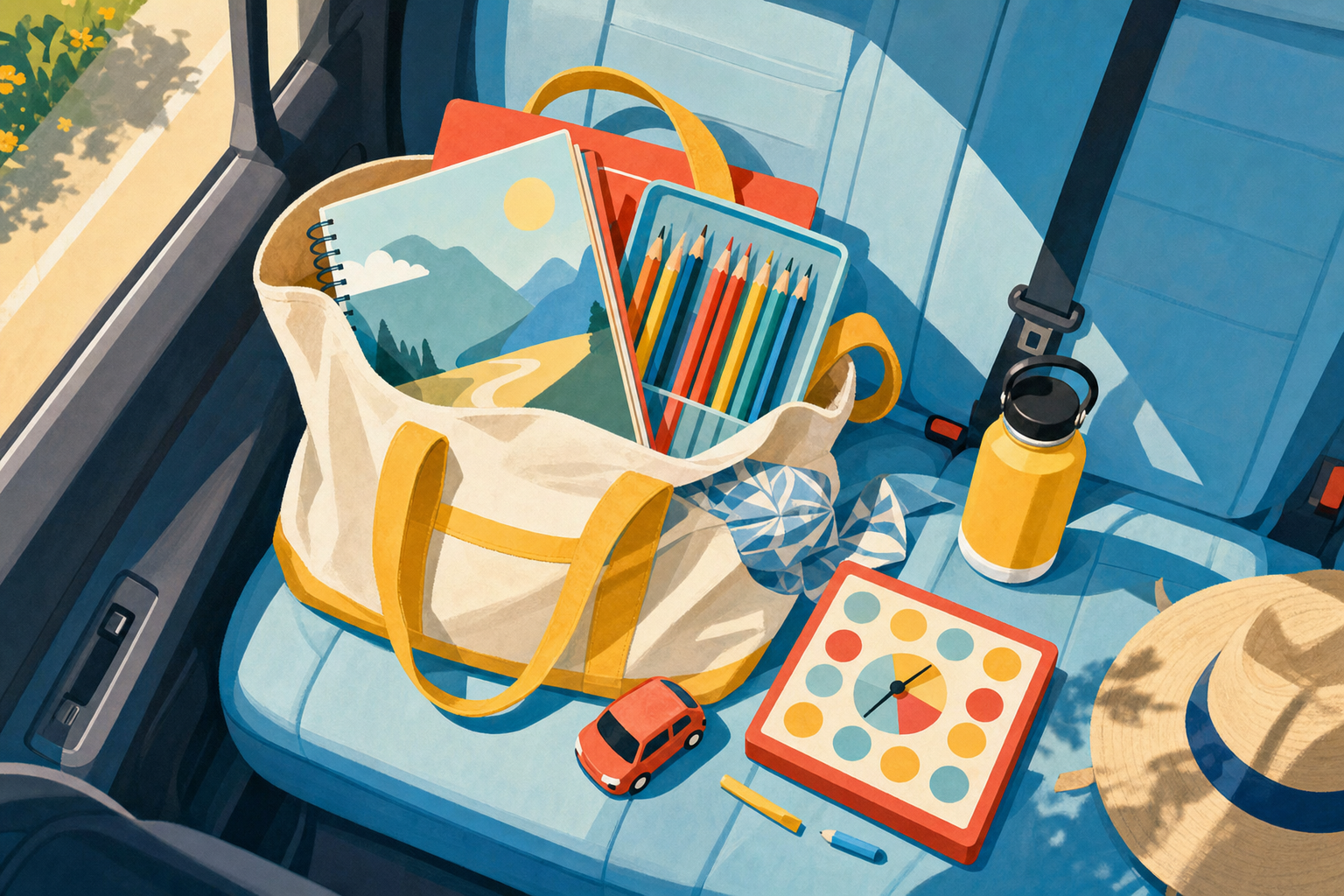
How to Pack a Road Trip Activity Bag That Actually Gets Used
You packed the travel activity bag two days ago, loaded it with brand-new toys and activities, and your kid asked for snacks 20 minutes into the drive. Now the bag sits untouched on the floor while you're fielding requests for "something to do" from the backseat.
The problem isn't what you packed. It's how you packed it.
A road trip bag kids will actually use isn't about quantity or novelty. It's about visibility, variety, and timing. Here's how to build a car activity kit that doesn't become a forgotten pile under the seat.
Start with a Clear Bag (Yes, Really)
Kids don't dig through opaque tote bags. If they can't see what's inside, they forget it exists.
Use a clear shoe organizer, mesh bag, or transparent pencil case for each type of activity. When your 5-year-old can see the puzzle, sticker book, and pipe cleaners all at once, they're far more likely to grab something on their own.
Skip the single giant duffel. Break activities into smaller, see-through pouches by type: one for building toys, one for quiet games, one for drawing supplies. This also prevents the classic problem where all 47 items spill onto the car floor at the first sharp turn.
Pack in Rotations, Not All at Once
The biggest mistake parents make with a travel activity bag is putting everything out from mile one. Kids get overwhelmed by too many choices, pick nothing, and ask what else you have.
Instead, pack activities in three waves:
- Wave 1 (first hour): Familiar favorites like magnetic tiles, small figurines, or a favorite book
- Wave 2 (mid-trip): Something new but low-effort, like sticker scenes or printable coloring pages from Chunky Crayon
- Wave 3 (final stretch): The "big reveal" item, maybe a small Lego set or activity book they've never seen
Keep waves 2 and 3 hidden in the front seat or trunk until you need them. The element of surprise buys you another 30 to 45 minutes of focus.
This same rotation trick works for other long stretches of downtime. If you're planning activities for situations like waiting rooms or long layovers, staggered reveals keep kids engaged without requiring you to pack twice as much.
Choose Activities That Work in a Moving Car
Not every "travel activity" actually survives a car ride. Avoid anything with a thousand tiny pieces, loose caps, or pages that rip if you breathe on them wrong.
Here's what holds up:
- Reusable sticker books (not the flimsy kind that tears)
- Wikki Stix or pipe cleaners (zero cleanup, endless shapes)
- Dry-erase activity books (one marker, no paper waste)
- Small building toys (Lego Duplo, Magna-Tiles in a snap-lid container)
- Audiobooks or podcasts (not screen time, and they don't require fine motor skills)
Skip markers unless they're truly washable and you're feeling brave. Crayons roll under seats. Colored pencils snap in half. If you want drawing tools, go with chunky crayons in a pencil case that zips completely shut.
Make the Bag Easy for Kids to Reach (and Close)
If your kid has to ask you to grab the activity bag every time they want something, it's not serving its purpose. They need independent access.
Put the bag on the seat next to them, not on the floor. Use a small backpack or tote with a wide opening, not a drawstring bag they can't manage while buckled in.
And here's the key detail most parents miss: teach them how to close it before the trip starts. Practice at home. Show them how to zip the pencil case, snap the Lego bin, and tuck everything back in the main bag. Kids as young as 4 can do this if you show them once without nagging.
When they know the bag has a "closed" state and it's their job to maintain it, you're not constantly turning around to pick up scattered toys at 70 miles per hour.
Include One Activity That Needs Your Voice
Most road trip bag kids gravitate toward solo activities, and that's fine. But pack one thing that invites your participation without requiring you to turn around or leave the driver's seat.
Examples:
- Audiobook you all listen to together (chapter books work great for ages 5 and up)
- Car bingo or scavenger hunt cards (Kids Road Kit generates free printable packs for exactly this)
- I Spy or 20 Questions (no supplies needed, just your voice)
This bridges the gap between independent play and the inevitable "I need you" moment. When kids feel connected to you without needing constant interaction, the activity bag becomes a tool for both of you, not just a distraction you're handing back.
For trips that stretch into evening or overnight drives, activities that work in dim light become critical. Night-specific road trip games can fill that gap when your usual car activity kit stops working after sunset.
Test the Bag Before You Leave
Two days before your trip, hand your kid the packed bag and let them explore it for 20 minutes. Watch what they pick up first, what they ignore, and what frustrates them.
If they can't open the container, swap it. If they lose interest in 90 seconds, pull that item. If they immediately ask you for help, it's not truly independent.
This test run also lets you catch missing pieces (where did the green Magna-Tile go?), dead batteries, or dried-out markers before you're an hour from home.
You're not trying to curate the perfect selection. You're trying to remove the obstacles that make kids give up and say "I'm bored" when a perfectly good activity is right in front of them.
What Not to Pack
Just as important as what goes in: what stays home.
- Anything with 50+ pieces (you'll be picking them up until Christmas)
- Toys that need a flat surface (the car floor doesn't count)
- Glitter, glue, or paint (you know why)
- Their favorite lovey or comfort item from home (it should be with them, not buried in a bag)
- New toys you haven't opened yet (test them first; packaging can be impossible to open in a moving car)
And here's the controversial one: skip the snacks in the activity bag. Snacks are not activities. They're fuel. Keep them separate so kids don't associate the bag with food and ignore the actual games.
The Real Win: A Bag That Empowers, Not Entertains
The goal of a travel activity bag isn't to keep your kid busy for six straight hours. That's not realistic, and it's not necessary.
The goal is to give them agency. When they're restless, they have options they can access and manage on their own. When they're overwhelmed, they have something familiar. When they're bored, they have just enough novelty to reset.
You're not packing a bag to entertain them. You're packing a bag so they can entertain themselves, and that's a completely different (and far more achievable) mission.
Before your next trip, grab a free printable road trip activity pack from Kids Road Kit. Enter your kid's age and trip length, and you'll get a custom set of bingo cards, scavenger hunts, and games designed to work in a moving car. No email, no signup, just print and go.
Then pack the bag, test it once, and trust that your kid knows what to do with it. They'll surprise you.